<?xml version="1.0" encoding="UTF-8"?>
<rss xmlns:rdf="http://www.w3.org/1999/02/22-rdf-syntax-ns#" xmlns:dc="http://purl.org/dc/elements/1.1/" xmlns:taxo="http://purl.org/rss/1.0/modules/taxonomy/" version="2.0">
  <channel>
    <title>mnartists.org: Steve Dietz</title>
    <link>http://www.mnartists.org/artistHome.do?rid=13571</link>
    <description>Artist</description>
    <item>
      <title>Database Imaginary</title>
      <link>http://www.mnartists.org/work.do?rid=56856</link>
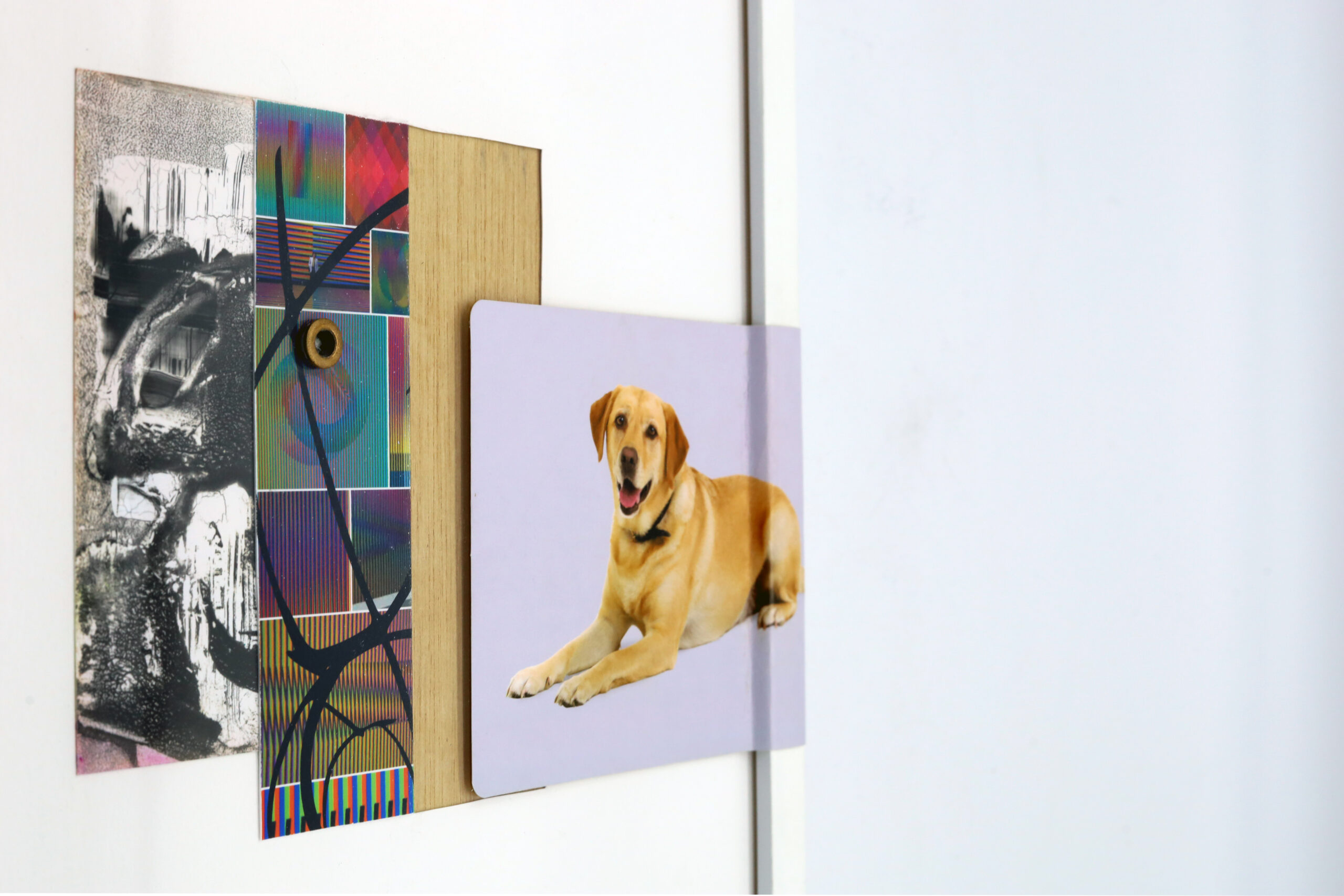
      <description>&lt;a href="http://www.mnartists.org/work.do?rid=56856"&gt;&lt;img src="http://www.mnartists.org/uploads/users/user_3041/5905dad07502a7ab2707238e449e26cf/5905dad07502a7ab2707238e449e26cf_scale_109_67.jpg" height="67" width="109" border="1" alt="Database Imaginary" /&gt;&lt;/a&gt;&lt;br/&gt;Databases drive culture. 33 artists take us on an imaginative and subversive ride. The artists presented in Database Imaginary use databases to comment on their uses and to imagine unknown uses. The term database was only coined in the 1970s with the rise of automated office procedures, but the 23 projects in this exhibition - which includes wooden sculptures, movies and telephone user-generated guides to the local area - deploy databases in imaginative ways to comment on everyday life in the 21st century. Using newly inflected forms of visual display arising from computerized databases, the works seem to raise questions about authorship, agency, audience participation, control and identity.&lt;br/&gt;&lt;br/&gt;image: &lt;a href="http://www.mnartists.org/uploads/users/user_3041/a09819c3f9dcc8d1cff2a95c27f962ae/a09819c3f9dcc8d1cff2a95c27f962ae.jpg"&gt;Memory Theater&lt;/a&gt;&lt;br/&gt;&lt;br/&gt;image: &lt;a href="http://www.mnartists.org/uploads/users/user_3041/1811d1b897a45a7c4e3099fcab1b55f0/1811d1b897a45a7c4e3099fcab1b55f0.jpg"&gt;Mobile Scout&lt;/a&gt;&lt;br/&gt;</description>
      <enclosure url="http://www.mnartists.org/uploads/users/user_3041/a09819c3f9dcc8d1cff2a95c27f962ae/a09819c3f9dcc8d1cff2a95c27f962ae.jpg" length="427642" type="image/jpeg" />
      <enclosure url="http://www.mnartists.org/uploads/users/user_3041/1811d1b897a45a7c4e3099fcab1b55f0/1811d1b897a45a7c4e3099fcab1b55f0.jpg" length="271832" type="image/jpeg" />
      <pubDate>Sat, 08 Jan 2005 06:00:39 GMT</pubDate>
      <author>Steve Dietz</author>
    </item>
    <item>
      <title>State of the Art: Maps, Stories, Games and Algorithms from Minnesota</title>
      <link>http://www.mnartists.org/work.do?rid=29062</link>
      <description>&lt;a href="http://www.mnartists.org/work.do?rid=29062"&gt;&lt;img src="http://www.mnartists.org/uploads/users/user_3041/ef204377e8c5255d1fd981d5da79c5a9/ef204377e8c5255d1fd981d5da79c5a9_scale_110_13.jpg" height="13" width="110" border="1" alt="State of the Art: Maps, Stories, Games and Algorithms from Minnesota " /&gt;&lt;/a&gt;&lt;br/&gt;State of the Art, curated by Steve Dietz, is an exhibition at the Carleton Art Gallery, opening November 5, 2003. The show is part of the Digital Arts Festival at Carleton and related to a class that Steve Dietz is teaching with Justin Bakse, Art After New Media. Minnesota has a strong community of new media artists, and State of the Art looks at some Minnesota-based projects dealing with issues of mapping, narrative, gaming, and computational aesthetics.&lt;br/&gt;&lt;br/&gt;image: &lt;a href="http://www.mnartists.org/uploads/users/user_3041/25a491e100a7182ba0048bd2d921fa3e/25a491e100a7182ba0048bd2d921fa3e.jpg"&gt;State of the Art installation view&lt;/a&gt;&lt;br/&gt;&lt;br/&gt;image: &lt;a href="http://www.mnartists.org/uploads/users/user_3041/c10cff864fd8458ac8c08435d006612d/c10cff864fd8458ac8c08435d006612d.jpg"&gt;State of the Art installation view&lt;/a&gt;&lt;br/&gt;&lt;br/&gt;image: &lt;a href="http://www.mnartists.org/uploads/users/user_3041/7765332495dfa2023a5c5bded0d5f3a6/7765332495dfa2023a5c5bded0d5f3a6.jpg"&gt;State of the Art installation view&lt;/a&gt;&lt;br/&gt;&lt;br/&gt;image: &lt;a href="http://www.mnartists.org/uploads/users/user_3041/ddfa0ee4a7e4ca009cfbcfc08beace64/ddfa0ee4a7e4ca009cfbcfc08beace64.jpg"&gt;State of the Art installation view&lt;/a&gt;&lt;br/&gt;&lt;br/&gt;image: &lt;a href="http://www.mnartists.org/uploads/users/user_3041/aa755a80408d1bdb4a428c319621365b/aa755a80408d1bdb4a428c319621365b.jpg"&gt;State of the Art installation view&lt;/a&gt;&lt;br/&gt;&lt;br/&gt;image: &lt;a href="http://www.mnartists.org/uploads/users/user_3041/3faa83576d5cd0e4ce9cbff2b601916d/3faa83576d5cd0e4ce9cbff2b601916d.jpg"&gt;State of the Art installation view&lt;/a&gt;&lt;br/&gt;&lt;br/&gt;image: &lt;a href="http://www.mnartists.org/uploads/users/user_3041/f88a14935faafb8ff5e348b9001ef4c1/f88a14935faafb8ff5e348b9001ef4c1.jpg"&gt;State of the Art installation view&lt;/a&gt;&lt;br/&gt;&lt;br/&gt;image: &lt;a href="http://www.mnartists.org/uploads/users/user_3041/2e8146c52ed7f38e7d711542eb822d9b/2e8146c52ed7f38e7d711542eb822d9b.jpg"&gt;Playing the Aracade Console (Gustafson)&lt;/a&gt;&lt;br/&gt;&lt;br/&gt;image: &lt;a href="http://www.mnartists.org/uploads/users/user_3041/d2d28ee1578f3877565c61a4062c088b/d2d28ee1578f3877565c61a4062c088b.jpg"&gt;Entry to Stories of Electromagnetism&lt;/a&gt;&lt;br/&gt;</description>
      <enclosure url="http://www.mnartists.org/uploads/users/user_3041/25a491e100a7182ba0048bd2d921fa3e/25a491e100a7182ba0048bd2d921fa3e.jpg" length="939280" type="image/jpeg" />
      <enclosure url="http://www.mnartists.org/uploads/users/user_3041/c10cff864fd8458ac8c08435d006612d/c10cff864fd8458ac8c08435d006612d.jpg" length="235711" type="image/jpeg" />
      <enclosure url="http://www.mnartists.org/uploads/users/user_3041/7765332495dfa2023a5c5bded0d5f3a6/7765332495dfa2023a5c5bded0d5f3a6.jpg" length="148297" type="image/jpeg" />
      <enclosure url="http://www.mnartists.org/uploads/users/user_3041/ddfa0ee4a7e4ca009cfbcfc08beace64/ddfa0ee4a7e4ca009cfbcfc08beace64.jpg" length="263056" type="image/jpeg" />
      <enclosure url="http://www.mnartists.org/uploads/users/user_3041/aa755a80408d1bdb4a428c319621365b/aa755a80408d1bdb4a428c319621365b.jpg" length="367593" type="image/jpeg" />
      <enclosure url="http://www.mnartists.org/uploads/users/user_3041/3faa83576d5cd0e4ce9cbff2b601916d/3faa83576d5cd0e4ce9cbff2b601916d.jpg" length="513912" type="image/jpeg" />
      <enclosure url="http://www.mnartists.org/uploads/users/user_3041/f88a14935faafb8ff5e348b9001ef4c1/f88a14935faafb8ff5e348b9001ef4c1.jpg" length="594921" type="image/jpeg" />
      <enclosure url="http://www.mnartists.org/uploads/users/user_3041/2e8146c52ed7f38e7d711542eb822d9b/2e8146c52ed7f38e7d711542eb822d9b.jpg" length="552423" type="image/jpeg" />
      <enclosure url="http://www.mnartists.org/uploads/users/user_3041/d2d28ee1578f3877565c61a4062c088b/d2d28ee1578f3877565c61a4062c088b.jpg" length="515145" type="image/jpeg" />
      <pubDate>Wed, 05 Nov 2003 05:07:10 GMT</pubDate>
      <author>Steve Dietz</author>
    </item>
    <item>
      <title>The Art of Our Times</title>
      <link>http://www.mnartists.org/work.do?rid=19758</link>
      <description>&lt;a href="http://www.mnartists.org/work.do?rid=19758"&gt;&lt;img src="http://www.mnartists.org/uploads/users/user_3041/64438771f24d99c4cab8e2e6eff1809b/64438771f24d99c4cab8e2e6eff1809b_scale_110_43.jpg" height="43" width="110" border="1" alt="The Art of Our Times" /&gt;&lt;/a&gt;&lt;br/&gt;"The Art of Our Times"&#xD;Interview of Steve Dietz by Ursula Hentschlager + Zelko Wiener January 2002 for "Webfictions" (New York: Springer, 2003). http://www.cyberpoiesis.net/shortcuts/&#xD;&#xD;H+W: With the Gallery9 area in the Walker site you have developed a rich offering in the field of actual web- and netart. When did you start with your web-work and why?&#xD;&#xD;SD: I started at the Walker Art Center in 1996. At the time, they/we were trying to understand how to intersect with all the techno-hype. My position was quite simple: that as an institution with the mission of being a catalyst for creative expression (www.walkerart.org/generalinfo/), we needed to pay attention to the art of our times and what was happening on the net interested me very much.&#xD;&#xD;H+W: Are you content with the Gallery9 up to now and which are your further plans?&#xD;&#xD;SD: So, from the very beginning, I thought of Gallery9 as a "space" for native art separate from the communications aspects of the umbrella site. I feel that Gallery9 has made a real contribution at the institutional level, and I love the projects and discourse we have been able to support. While at the time, an online "gallery" made some sense (the 9 comes from the fact that there is no public 9th floor at the Walker), I think it's a limiting notion. At least, we didn't try and do a physical representation! Nevertheless, we are in the midst of a major overhaul of the site, which will be much more about connections (networks + hyper-context).&#xD;&#xD;H+W: Which is the current situation with media art in Minneapolis?&#xD;&#xD;SD: There are some very fine artists. Piotr Szyhalski is at the Minneapolis College of Art and Design and his "Ding an sich" was our first Gallery9 commission (www.walkerart.org/gallery9/szyhalski). There is also a new New Media Institute at the University, and the Design Institute there, run by Jan Abrams is very interested in new media. There are many other artists, of course, from Colette Gaiter to the conflux site. Still, the "scene" has not taken off as much as one might hope. We recently launched a site called Minnesota Artists Online (mnartists.org), which is for any and all artists, but in the coming year, we have funding specifically to focus on creating a new media platform for the region, which I hope will spur debate and conversation.&#xD;&#xD;H+W: How far is that the typical situation for the USA?&#xD;&#xD;SD: "The situation" is a hard question to answer succinctly. I generally say that with the dismal state of alternative spaces in the U.S., there is not nearly the robust environment for new media art that you find in UK / Europe. On the other hand, there are many committed artists throughout the U.S. with, perhaps areas of concentration on the coasts, although this is not as hegemonic as it once was. In terms of institutions, it seems as if every educational institution is adding a "new media center" program, and this can only add to the richness of the environment in the end, although there are probably a number of misguided efforts as well. For museums, net art and digital art are more and more present, although relatively few have made the kind of commitment that the Walker, Guggenheim, Whitney, SFMOMA and Dia have. Is this good or bad?&#xD;&#xD;H+W: Commitments concerning the artists or the art per se? Which do you mean?&#xD;&#xD;SD: I can only speak specifically for the Walker, but as an art center the core of our commitment is intended toward the artist. Commitment to the "art per se" is also important, I think. Perhaps an element that museums and educational centres can contribute to more strongly, although even as I write this, the unfortunate truth is that even many of the most serious critical efforts are artist-driven, whether it is Bookchin's line or crumb or your project or cream.&#xD;&#xD;H+W: Which is the big challenge in working with the web?&#xD;&#xD;SD: Everything. I suppose that for me, working in a multidisciplinary institution, one of the most interesting challenges is experimenting with the web as an independent "space" vs as a networked space in a physical location as well as thinking about it as a distinct medium without ghettoizing it from larger conversations.&#xD;&#xD;H+W: Which is the meaning of webart within the field of media art?&#xD;&#xD;SD: Webart is a term I almost never use, although I have noticed, lately, a specificity to the term that differentiates it as WWW-based art from network art in general. In the end, it doesn't seem like an interesting or fundamental distinction to me, although it is critical to understand the net as far more than http and html protocols.&#xD;&#xD;H+W: Which is the meaning of netart within the field of media art then?&#xD;&#xD;SD: I tend to look at two areas - networks and computing. This is brought together in the term telematic, although I would never say that both are necessary. There is also discussion around "code art" let alone transgenic art, etc. So, I tend to think fairly broadly and agnostically at art / culture that integrally uses networks and / or computing, although I recognize this is not necessarily a definitive definition. ;-) &#xD;&#xD;H+W: Which criteria do you use in your decision process?&#xD;&#xD;SD: I have a secret checklist and any work that scores neutral smiley or greater  on at least 85% of each of the criteria. . . .  When I was studying photography, I always thought that the notion of a masterpiece was absurd. Individual images mean so little outside of their context. I think the same is true for net art. One project may be of immense interest in a particular context and little interest in another. This is not intended to obviate issues of skill, quality, etc. but as I have written ad nauseum, I am more concerned about "understanding" too early in the medium's process what constitutes good than not knowing.&#xD;&#xD;H+W: How far are technical criteria helpful to point out single artworks?&#xD;&#xD;SD: I think it is useful to understand the technical aspects of a work, and as with any art from painting to video, there are artists' artists, whose technical mastery is more widely admired than their art. So, there is a little negotiation that goes on, which I don't think is a Catch 22 but which can seem like one. Too many times, knowledgeable art professionals dismiss a net art work because it doesn't behave like the art they know. It is important to understand what is going on under the hood and how this might influence a different goal than with video or photography, etc. At the same time, I think that the most interesting and influential net art will be more than a neat hack.&#xD;&#xD;H+W: What about content criteria?&#xD;&#xD;SD: Content criteria reminds me of content filters. I may decide I'm not interested in a particular presentation of content but to say "no xxx" or whatever seems impossible.&#xD;&#xD;H+W: To collect webart still is a rather new approach. What will you do, when current systems will be out of use? Do you yet think about that problem?&#xD;&#xD;SD: Yes, I think about the problem. There are many facets to the issue. Collecting some net art is no more than a feeble attempt at documentation. E.g. Lisa Jevbratt's Stillman project, which we commissioned (www.walkerart.org/gallery9/stillman/). Other efforts I think remain valid over time, but the technology changes, so what to do? We try and be involved in various discussions about this issue, and are working with Jon Ipolito and Rhizome on a "variable media" project to test some of these ideas (www.guggenheim.com/variablemedia/). I still remain committed to the notion that to not try and collect / document these efforts on the web would be an abrogation of responsibility to the culture at large.&#xD;&#xD;H+W: Do you see a challange in developing in multimedia formats like flash or shockwave?&#xD;&#xD;SD: My off-the-cuff response is that flash is the revenge of the design community, which (to be overly broad), hated the lack of control of presentation in html. And I think it's also easy to understand flash / shockwave as animation with buttons. Plus a lot of it is a lot of fun. That said, I'm not particularly interested in "flash art." I'm interested in photography but only mildly interested in platinum photography per se. In the same way, flash may or may not adhere as a subgenre (I think it would be odd for a proprietary format to do this - sort of like a brand of pastels rather than pastel drawings), but it's not an important distinction for me. Some flash art will be of interest and some won't.&#xD;&#xD;H+W: Webart / netart actually offers the chance for construction of reality, respecitve of the "world", because it is possible to build animated environments and therefor create autonomous subsystems. What do you think about that?&#xD;&#xD;SD: I was thinking about this when I was re-looking at the zeitgenossen site this morning. Very early on, we commissioned Marek Walczak to do a VRML interpretation of the Minneapolis Sculpture Garden (www.walkerart.org/resources/res_msg_vrmlframe.html). The idea was that it would become an animated environment for artists to work in / with virtually. It didn't really work out that way, and while I think the promise exists, it has proved difficult in reality. Part of it, I think, is simply that claiming a 2D screen is immersive is not entirely true. Immersive-like, perhaps. But this will change. There are very few "immersive" projects that I think succeed. For me, Zeitgenossen approaches success. Melinda Rackham's work and Gregory Chatonsky are some of the few. But I agree 100% that the potential exists, and that is my point about being a curator. It's not to say which direction to go, but to follow where you take us.&#xD;&#xD;H+W: There are more and more hybrids between magazines, art collections, exhibition spaces on the one side and on the other side there is a mixing of professions. Artists are organising shows, theorists are working as artists, curators are writing on theory and so on. What do you think about that?&#xD;&#xD;SD: I enjoy the permeability of boundaries, although I don't think we should throw specialization out the window. Certainly, the multi-roles of artists has been absolutely critical to the advancement of the field at all.&#xD;&#xD;H+W: The web consists of many single "worlds". Which community do you think highly of importance? &#xD;&#xD;SD: For me, the ongoing efforts of nettime, rhizome, and thingist, among others, are inspirational. I am very interested in the issues of how "locality" can be expressed / maintained in a global, connected environment. What Andreas Broeckman refers to as the translocal. This is an area of research in the coming year (see http://translocations.walkerart.org).&#xD;&lt;br/&gt;</description>
      <pubDate>Mon, 14 Apr 2003 03:05:27 GMT</pubDate>
      <author>Steve Dietz</author>
    </item>
    <item>
      <title>In the context of contemporary art, what is your vision of a yet unknown art?</title>
      <link>http://www.mnartists.org/work.do?rid=19658</link>
      <description>&lt;a href="http://www.mnartists.org/work.do?rid=19658"&gt;&lt;img src="http://www.mnartists.org/uploads/users/user_3041/37ebe2975a21f6d29f26be5c914358cb/37ebe2975a21f6d29f26be5c914358cb_scale_110_18.jpg" height="18" width="110" border="1" alt="In the context of contemporary art, what is your vision of a yet unknown art?" /&gt;&lt;/a&gt;&lt;br/&gt;"In the context of contemporary art, what is your vision of a yet unknown art?"&#xD;&#xD;For Jochen Gerz's "Anthology of Art" (http://www.anthology-of-art.net/), people were invited to respond to the above question. This is my response.&#xD; &#xD;"The future has already arrived; it's just unevenly distributed."&#xD;--William Gibson&#xD;&#xD;&#xD;Within months - virtually simultaneously on certain time scales - Raqs Media Collective, Delhi, coins the term "rescension" and The New York Times writes about "mash-ups" - songs that "typically match the rhythm, melody and underlying spirit of the instrumentals of one song with the a cappella vocals of another."&#xD;&#xD;http://www.nytimes.com/2002/05/09/arts/09MASH.html&#xD;&#xD;&#xD;RESCENSION&#xD;"A re-telling, a word taken to signify the simultaneous existence of different versions of a narrative within oral, and from now onwards, digital cultures. Thus one can speak of a 'southern' or a 'northern' rescension of a myth, or of a 'female' or 'male' rescension of a story, or the possibility (to begin with) of Delhi/Berlin/Tehran 'rescensions' of a digital work. The concept of rescension is contraindicative to the notion of hierarchy. A rescension cannot be an improvement, nor can it connote a diminishing of value. A rescension is that version which does not act as a replacement for any other configuration of its constitutive materials. The existence of multiple rescensions is a guarantor of an idea or a work's ubiquity. This ensures that the constellation of narrative, signs and images that a work embodies is present, and waiting for iteration at more than one site at any given time. Rescensions are portable and are carried within orbiting kernels within a space. Rescensions, taken together constitute ensembles that may form an interconnected web of ideas, images and signs."&#xD;&#xD;http://www.sarai.net/compositions/texts/works/lexicon.htm&#xD;&#xD;&#xD;Turning and turning in the widening gyre&#xD;The falcon cannot hear the falconer;&#xD;Things fall apart; the centre cannot hold;&#xD;Mere anarchy is loosed upon the world,&#xD;--W.B. Yeats, "The Second Coming"&#xD;&#xD;http://www.poets.org/poems/poems.cfm?prmID=1369&#xD;&#xD;&#xD;For Yeats - that is for modernist, Euro-American high culture -, when the centre cannot hold, things fall apart. "Mere" anarchy results. It's as "simple" as that.&#xD;&#xD;For the culture of rescension - of sampling and recycling, of mash-ups - the widening gyre is precisely contraindicative of the notion of hierarchy. Yes! The centre cannot hold.&#xD;&#xD;But the cultures of privatization and security are tenacious. They appropriate rescension - sample the samplers - and invert the widening gyre so that it becomes vertigo, a downward spiral of containment, lock down, down the drain, cleansed.&#xD;&#xD;Within months of Raqs Media Collective coining the term "rescension", The New York Times writes an article about "mash-ups" in which the question at stake is not just whether they constitute a new art form, but whether they cannibalize sales, whether they can be sold.&#xD;&#xD;In "All Tomorrow's Parties," Gibson writes about this velocity - the speed with which an idea at the fringe, in the margins, is mainstreamed, brought into the centre. Order is restored.&#xD;&#xD;What is known is that in the present future every good idea will only have 15 minutes of privacy. What is unknown is whether in the future present the copy, the sample, the mash-up can loose upon the world a rescension or whether it will become derivative, a hedge, an option, merely a value.&#xD;&#xD;Steve Dietz&#xD;Minneapolis&#xD;May 2002&#xD; &#xD; &#xD; &#xD; &#xD;&lt;br/&gt;</description>
      <pubDate>Fri, 11 Apr 2003 01:45:55 GMT</pubDate>
      <author>Steve Dietz</author>
    </item>
    <item>
      <title>The Digital Object</title>
      <link>http://www.mnartists.org/work.do?rid=19399</link>
      <description>&lt;a href="http://www.mnartists.org/work.do?rid=19399"&gt;&lt;img src="http://www.mnartists.org/uploads/users/user_3041/4f1783167fc9700df315496a250831e3/4f1783167fc9700df315496a250831e3_scale_102_80.jpg" height="80" width="102" border="1" alt="The Digital Object" /&gt;&lt;/a&gt;&lt;br/&gt;The Digital Object &#xD;A conference at the American Museum of the Moving Image&#xD;October 16, 2000&#xD;Transcript of a talk by Steve Dietz,&#xD;Curator, New Media, Walker Art Center&#xD;&#xD;See http://www.yproductions.com/writing/archives/000036.html&lt;br/&gt;</description>
      <pubDate>Fri, 04 Apr 2003 05:49:25 GMT</pubDate>
      <author>Steve Dietz</author>
    </item>
    <item>
      <title>Interview of Steve Dietz by Jennifer Crowe; intelligent agent vol. 3 no. 1</title>
      <link>http://www.mnartists.org/work.do?rid=19126</link>
      <description>&lt;a href="http://www.mnartists.org/work.do?rid=19126"&gt;&lt;img src="http://www.mnartists.org/uploads/users/user_3041/8213ba29821bee85b1d6747c20d98084/8213ba29821bee85b1d6747c20d98084_scale_110_47.jpg" height="47" width="110" border="1" alt="Interview of Steve Dietz by Jennifer Crowe; intelligent agent vol. 3 no. 1" /&gt;&lt;/a&gt;&lt;br/&gt;intelligent agent vol. 3 no. 1&#xD;&#xD;An Interview with Steve Dietz by Jennifer Crowe&#xD;&#xD;As a concept, the Internet is old hat. Digital video is the norm. Computers are just tools of almost any trade. If artists are not actually using so-called "New Media" technologies to create and inform their work directly these days, they are certainly aware of them. But are the art institutions that show work of contemporary artists keeping pace? What is the status of the "New Media Art" exhibition within the American institution?&#xD;&#xD;Jennifer Crowe sits down with Steve Dietz, Curator of New Media at the Walker Art Center in Minneapolis, Minnesota to get some insight. &#xD;&#xD;Jennifer Crowe: The Walker Art Center sure takes its role in the risky business of "art and technology" seriously. Is it your location slightly off the beaten path that encourages this kind of risk taking or is it something else?&#xD;       &#xD;Steve Dietz: I don't think that geographic location has any relation to the Walker's efforts in this arena. Rather, it is its history as a multidisciplinary institution with major, independent programs in the visual arts, performing arts, film/video, and now new media. Also, the "art center" in our title is a kind of mandate to follow contemporary artistic practice wherever it leads, not just its known (historical) forms.&#xD;&#xD;JC: Art centers may not be reliant on known historical forms, but neither are (in theory) museums that show contemporary art. Is the difference the mandate to collect?&#xD;&#xD;SD: I agree the distinction is fuzzy, and I don't mean to make too much of it. But the Walker, and we are not unique in this regard, has a history of a significant part of programming being accomplished through artist residencies. This, I think, makes the institutional ethos more comfortable with "process," and the idea that supporting the artist does not always end up in a particular "object;" that we won't even necessarily know what the result will be at all. Collecting is not insignificant, but it is a sidebar to the point I was trying to make.&#xD;&#xD; JC: Have you experienced a shift in how artwork fueled by the cultural and technological developments of the last ten (and even going back 20 years) is characterized in the context of the art institution? Is the label "New Media Art" still relevant?&#xD;&#xD;SD: Some people get passionate about naming the field - new media, cyberarts, net art, etc. I think it is important to have a position about the practice that any such rubric covers, but I'm less interested in the label itself. I think that the art practice that I follow - call it new media - is both relevant and porous. 'New media' exhibitions are beoming increasingly irrelevant. We would no longer do a "painting show" or a "photography show," and I think that except for a historically-grounded survey a decade or more from now, there is little relevance to any show of "new media." The question of promotion is completely different. By and large, the state of the press is so pitiful that issues of newness, technology, cost/market, and copyright are about the only ways it understands when it comes to contextualizing or thematizing new media-based work.&#xD;&#xD;JC: Has there been any progress in how new media art has been covered and promoted by the press?&#xD;&#xD;SD: I suppose it depends upon what you call progress. I think that moving Matt Mirapaul's "Cybertimes" column to the dead tree edition of the "New York Times" creates a kind of visibility that is significant. I think that more survey articles in art publications are beginning to think about new media. I would say, however, that there remains a kind of DIY critical apparatus that exists primarily on lists and online and that by and large mainstream press does not "get it."&#xD;&#xD;JC: Is this just the traditional "I don't get it" that we see whenever new forms of artistic expression are introduced? Does the additional need for a certain level of technical competence on the part of viewers add to the difficulty? Are there other factors?&#xD;&#xD;SD: Very sophisticated contemporary arts professionals have been known to say "I just don't get it," yes, and probably there is an element of "pluginitis" - it is in people's wariness/response, but I think it's mostly a matter of time. In time, the people who thrive on networks and computing will be mid-career, "decorated" artists as well as the ones running publications (virtual and otherwise) and institutions (new media and otherwise), and the audiences will increasingly see these characteristics as normal if not natural. In the meantime, I think it's important to maintain and develop a sophisticated discourse at the same time that crossover discussions are attempted. The best result will be a rich, heterogeneous ecology of art practice, not everyone finally realizing THE answer.&#xD;&#xD;JC: What about the promotion of new media art by the museums and institutions that show it?&#xD;&#xD;SD: Museums are probably as good as the mainstream press. I thought both "Bitstreams" and "010101", for all their virtues as shows, were misrepresented by the museum press, which basically played to the press's interests outlined above. There is a bit of a vicious circle here, as, of course, the press office needs to get column inches and on-air minutes. But I want to emphasize that how things play out in the press is different, generally, than how the very same exhibitions are commonly conceptualized by the curators.&#xD;&#xD;JC: How can these disconnects be patched? What can curators do to ensure that their own museums "get it"? Does the impetus lie with the &#xD;institution?&#xD;&#xD;SD: To repeat my earlier answer in another way, I agree with William Gibson: "The future has already arrived, it's just unevenly distributed." I argue that any institution committed to exploring the contemporary must grapple with "new media" to some extent, so yes, it is incumbent upon us, but the danger, of course, is that institutions begin to drive practice, when it should be the other way around. The "impetus" is always with the artist.&#xD;&#xD;JC: How do you feel about spaces like the Zenith Media Lounge at the New Museum? Can architectural and technological rigidity be a good thing or are these more or less fixed spaces an automatic strike against work that is "beyond interface"?&#xD;&#xD;SD: I think the Zenith Media Lounge is important for the fact that a major museum committed real, physical space to new media in an ongoing way. That said, ironically, the architectural limitations of the basement location led to an interesting and dynamic "installation" by Lot/ek. Unfortunately, the museum has treated the installation as a permanent design with its own, additional set of limitations, and I think one of the lessons the field has learned from the Zenith Media lounge is that its designed constraints sometimes work against the best presentation of other work. &#xD;&#xD;JC: What have you seen in other spaces that works better? Where does the potential lie?&#xD;&#xD;SD: When "Telematic Connections" was installed at the Oklahoma City Museum of Art, it was clear that they had a "real" budget for installation, and it made a real difference. To some extent, installation issues are not rocket science. We can focus on philosophical issues when the resources are available and when they're not, and they're often not, work is compromised and so is the ability to reach a different public. That said, while I am very interested in the physical interfaces for networkbased work, I think there is also a lounge-like solution that has worked well on a temporary basis at various festivals, but seems difficult to instantiate on a permanent basis. Is this inevitable? I don't know. At the Walker, we are going to try and create a more informal, immersively mediatized space for viewing and presenting work.Finally, I think that a key is flexibility. There is no one-size-fits-all solution and, in fact, I think that it may be important to think about a variety of types of spaces rather than one "white cube/black box" solution.&#xD;&#xD;That said, while I am very interested in the physical interfaces for network-based work, I think there is also a lounge-like solution that has worked well on a temporary basis at various festivals, but seems difficult to instantiate on a permanent basis. Is this inevitable? I don't know.&#xD;&#xD;JC: What might such a space like the one you are creating at the Walker look or function like? What are your goals?&#xD;&#xD;SD: Well, given the above, it's perhaps not surprising that the Walker's new "mediatheque" will consist of six related spaces/functions. A lobby, which I view as an important programming space for larger-scale reactive works; an audio space; a lounge; a room of stations oriented toward screen-based work; a small installation gallery; and a small lab. In other words, a series of spaces with which we are trying to do different things rather than assuming that a single space can solve everything. Equally important to how we are thinking about new media, however, is that the mediatheque will be in the same building, essentially in the balcony, of the performing arts studio. And an upcoming collaborative commission by Raqs Media Collective (New Delhi) and Atelier Bow Wow, an architectural practice in Tokyo, to create a "Temporary Autonomous Sarai" to present net works in an exhibition context points to the kind of transdisciplinary, non-differentiated efforts that are also important, I think.&#xD;&#xD;JC: Can you comment on spaces in the planning or building stages -- like Eyebeam Atlelier -- or is it simply too soon to tell?&#xD;&#xD;SD: Elizabeth Diller [of architects Diller &amp; Scofidio] did a presentation at the Walker Art Center about Eyebeam, and I was bowled over. [1] I can't wait to see it in action. No doubt, there will be problems, but I think it has more potential than any of the other dedicated spaces I have seen from Karlsruhe to Tokyo to Sendai to Helsinki to Youngstown. It's going to take a certain amount daring to figure this thing out, and I hope Eyebeam proceeds apace.&#xD;      &#xD;JC: What role should didactic materials play in a new media art exhibition? Does new media art call for a different approach?&#xD;&#xD;SD: One of the virtues of the Internet is that artists can connect with an audience outside of the mediation of the institutional voice. On the other hand, I think one of the roles of the institution should be to provide some context - preferably in a personal, not institutional voice - for those who want it. There is nothing wrong per se with wall labels, but it would also be interesting to think about other approaches, such as what Chris Fahey's recent AI interface to Rhizome hints at.&#xD;&#xD;JC: What makes Fahey's "ada1852" interface to Rhizome so different?&#xD;&#xD;SD: Well, as the discussion on Rhizome has shown, it's not so different &#xD;per se. Weizenbaum created Eliza in the 60s, after all, but I guess I am motivated by it because to some extent I see "conversation" as a kind of  (unattainable) ideal of interactivity. [2]&#xD;&#xD;JC: Are you therefore looking for some of the same concepts and actions that drive much of new media art to inform and expand upon new museological education tools and programs? (IOW, it's not just a new-fangled audio guide or wall text in techno fonts?)&#xD;&#xD;SD: Yes! This is a whole other soap box, but it is demonstrably true that new media artistic practice that is (sometimes) initially seen as "far out" often becomes mainstream practice. This is not a question of artists as researchers, exactly, but it is how efforts percolate, and we are always interested in these boundary-crossing possibilities.&#xD;&#xD;JC: If so, can you think of some other examples of educational tools that have made this connection or artworks that have brought these ideas to light?&#xD;&#xD;SD: I have a whole list, but just start with [Antonio] Muntadas's File Room project. The idea of viewer participation in museum information is becoming increasingly important. And recently, the Walker has commissioned a "telematic table" by an artist-led group composed of Marek Walczak, Michael McAllister, Jakub Segen, and Peter Kennard, which will have an informatics function in the new building but hopefully be significantly different than the traditional computer kiosk solution. &#xD;&#xD;JC: After all this time and development, we've seen interest in new media art by the major institutions in the US wax and wane, wax and wane. What do you think lies ahead? Are you running out of patience or are you satisfied with the way things are heading?&#xD;&#xD;SD: Never satisfied. Frankly, I don't think any major U.S. institutions have done a particularly good job to date, but as long as artists continue to work with new media, it will become part of the institutional agenda. The important question is which will change more, institutional practice or artistic practice. &#xD;&#xD;NOTES:&#xD;1. For more information about the proposal, visit &#xD;http://www.arcspace.com/architects/DillerScofidio/eyebeam/&#xD;&#xD;2. In 1966, Joseph Weizenbaum created Eliza, a program that emulates  (arguably, crudely) a chat with a phychotherapist. Chris Fahey's "ada1852" emulates a conversation with Ada Lovelace, who is credited as the first computer programmer and worked with the engineer Charles Babbage, developer of the idea of the "Analytical Engine" in 1834. "ada1852" serves as an interface to Rhizome.org's ArtBase, an online archive of Internet-based artworks and was commissioned as part of Rhizome's alt.interface program in 2002. &#xD;&#xD;&amp;#168; 2003&#xD;&#xD;http://www.intelligentagent.com/archive/Vol3_No1_curation_crowe.html&#xD;&lt;br/&gt;&lt;br/&gt;application: &lt;a href="http://www.mnartists.org/uploads/users/user_3041/f1c61828279c9f9dfd5e4d15ce1ce837/f1c61828279c9f9dfd5e4d15ce1ce837.pdf"&gt;PDF of interview&lt;/a&gt;&lt;br/&gt;</description>
      <enclosure url="http://www.mnartists.org/uploads/users/user_3041/f1c61828279c9f9dfd5e4d15ce1ce837/f1c61828279c9f9dfd5e4d15ce1ce837.pdf" length="3149660" type="application/pdf" />
      <pubDate>Tue, 01 Apr 2003 06:21:44 GMT</pubDate>
      <author>Steve Dietz</author>
    </item>
    <item>
      <title>Translocations: A Conversation</title>
      <link>http://www.mnartists.org/work.do?rid=19087</link>
      <description>&lt;a href="http://www.mnartists.org/work.do?rid=19087"&gt;&lt;img src="http://www.mnartists.org/uploads/users/user_3041/c5e97b3635f4ce00a12d6517cd89a220/c5e97b3635f4ce00a12d6517cd89a220_scale_110_74.jpg" height="74" width="110" border="1" alt="Translocations: A Conversation" /&gt;&lt;/a&gt;&lt;br/&gt;Translocations: A Conversation&#xD;&#xD;March 11-22, 2002, Steve Dietz (Minneapolis), Guna Nadarajan (Singapore), Jeebesh Bagchi, Monica Narula, and Shuddhabrata Sengupta of Raqs Media Collective (Delhi), and Yukiko Shikata (Tokyo) engaged in an online conversation that started from the idea of translocations and ranged widely across the terrain of global net art practice and philosophy. Following is an edited version of our conversation.[1]&#xD;&#xD;&#xD;From: Steve Dietz &lt;steve.dietz@walkerart.org&gt; &#xD;Date: Mon Mar 11, 2002 0:48am&#xD;Subject: Why "translocations"?&#xD;&#xD;Dear Guna, Jeebesh, Monica, Shuddha (Raqs), and Yukiko,&#xD;&#xD;I first came across the term "translocal" in the writings of Andreas Broeckmann.[2] For me, one of the ways the term resonated most strongly was the flip from terms such as transnational, transglobal, and global. If McDonalds and Starbucks are the poster children for such corporations--the near hegemonic presence of a single brand globally--then translocal foregrounds the aspect of "situatedness" (sometimes geographically local and sometimes psychographically?) while acknowledging that we live and practice in a (potentially) networked context.&#xD;&#xD;Tetsuo Kogawa, who also uses the term translocal--and said in a conversation that he had coined/used the term independently--suggests a similar flip in "The Global Transformation of Books and Reading" when he states that the goal is not, in fact, to "think globally, act locally," as the popular refrain goes, but to "think locally, act globally."[3] In other words, focus on the local, but allow the networks to propagate the action globally.&#xD;&#xD;Anyway, my interest is not in the term per se, and I recognize that there is a complicated dynamic involved. Raqs, if I'm not off base, it is precisely the complexity of this dynamic--of not being "Indian," even though what Sarai does is very rooted--that you refer to in your Rhizome interview.[4] &#xD;&#xD;I am also interested in exploring the network, and specifically new media practices, as a fruitful way to approach issues of globalization, especially the roles of the local and the trans in the global.&#xD;&#xD;So my first question is: What do each of you think about the term translocal and some of the issues embedded in what I have said and in Broeckmann's and Kogawa's texts, as well as in other references to the term and these issues?&#xD;&#xD;From: Shuddhabrata Sengupta &lt;shuddha@sarai.net&gt; &#xD;Date: Mon Mar 11, 2002 2:48am&#xD;Subject: Re: Why "translocations"?&#xD;&#xD;Dear Steve and all the others on the list,&#xD;&#xD;First of all, a big hello from Jeebesh, Monica, and me (Shuddha) in the Raqs Media Collective at Sarai in Delhi. We look forward to a stimulating few days of conversation.&#xD;&#xD;I think Broeckmann is quite close to what many of us feel when he talks (implicitly) about the tensions between the pulls of nomadism and the search for the feeling of home, in his Translocal.Net interview.[5]&#xD;&#xD;This tension, we feel, describes the predicament of translocality quite accurately. The feeling of being transient where you are, no matter how long you have been there. The sense of "internal" exile, even from the context of mainstream art and media practice, that some of us have come to recognize as part of our everyday experience. And also the unexpected alliances that we find with our traveling companions--free software activists, hackers, coders on the fringes of code, and other free-floating intellectual and cultural artisans.&#xD;&#xD;In this sense, for us, the creation of a sarai was to create a "home for nomads" and a resting place for practices of new media nomadism. Traditionally, sarais were also nodes in the communications system (horse-mail!) and spaces where theatrical entertainments, music, dervish dancing, and philosophical disputes could all be staged. They were hospitable to a wide variety of journeys--physical, cultural, and intellectual. In medieval Central and South Asia, sarais were the typical spaces for a concrete translocality, with their own culture of custodial care, conviviality, and refuge. They also contributed to syncretic languages and ways of being. We would do well to emulate even in part aspects of this tradition in the new media culture of today.&#xD;&#xD;I was particularly struck once by what the Russian cyberfeminist Irina Aristarkhova said in a panel on cyberfeminist practices in the last Next 5 Minutes conference in Amsterdam. I am paraphrasing her, but she spoke of the importance to all who work in new media of the idea of "hospitality," of always being hosts and guests in each other's practices.[6] &#xD;&#xD;This might create oases of locatedness along the global trade routes of new media culture.&#xD;&#xD;We would like to share here with you a fragment from an e-mail interview that Rhizome did with Monica.[7]&#xD;&#xD;On "Locatedness" &#xD;&#xD;Rhizome: Are there unique Indian qualities to the media projects at Sarai? Or do you consider yourself part of a more global aesthetic?&#xD;&#xD;Raqs: For us, the idea of a "uniquely Indian quality" is not really meaningful, or expressive of anything at all. India is the name of a nation state, and "Indian" the term denoting nationality that happens to be entered in our passports, but it does not really suggest anything real or concrete in terms of culture to us; nor do the words French, or Italian, or Australian, or American, for that matter. Those who use the term "Indian Culture" usually mean a complex of values, attitudes, and tendencies that have been processed to mark out a space that is "uniquely" theirs, and which mirrors an obsession with territoriality. We are puzzled as to what (in cultural terms) can "uniquely" be the possession of any sets of people, in exclusivity. Culture is something that never respects borders and territories. It is infectious, nomadic, and volatile. We see culture, and cultural intervention, as an agile constellation of people, practices, connections, and objects that come into being when different disciplines, histories, and attitudes encounter each other in a global cultural space. This does not mean that we subscribe to the view that there are no cultural differences, but that cultural affinities and differences are not reducible to the mere notations of current political cartography.&#xD;&#xD;The work that we do reflects the very specific conditions of a large, chaotic, industrial, cosmopolitan city that is connected globally through flows of information, finance, and industrial processes to the whole world. While we may hesitate to use the term Indian to describe our work, we are certain that our work speaks to the specific, simultaneously global and local realities of working and living in a city like Delhi, and of engaging with the diverse and complex histories of modernity in South Asia, as reflected in media cultures and practices. &#xD;&#xD;It is because we are strongly located in a city like Delhi that we also know that we are part of, and contribute to, a global domain of aesthetic and cultural practice.&#xD;&#xD;Looking forward to all our "translocal" conversations&#xD;&#xD;Cheers&#xD;Shuddha&#xD;for Raqs Media Collective&#xD;&#xD;From: Steve Dietz &lt;steve.dietz@walkerart.org&gt; &#xD;Date: Mon Mar 11, 2002 11:39pm&#xD;Subject: RE: Why "translocations"?&#xD;&#xD;Shuddha,&#xD;Thanks for this response about sarai and Raqs' thinking about the interplay of nomadism and locatedness. I like very much the idea of a "home for nomads" and understand your issues with "Indian Culture," but I want to press a bit more on this interplay.&#xD;&#xD;Is there are difference between "a city like Delhi" and Delhi? In other words, there are of course experiences, attitudes, and possibilities common to Delhi and Tokyo and Rio and perhaps to a lesser extent Minneapolis. Are there also meaningful differences?&#xD;&#xD;Yukiko, I know you were involved in Knowbotic Research's 10_dencies project, which mapped urban flows in Tokyo and Rio among other places.[8] Perhaps you can comment on your experience with this important project in terms of the interplay between the transglobal flows and the local locatedness of the participants.&#xD;&#xD;I guess what I am asking--and we don't have to remain fixated on this, I promise--is how does the "where" fit in? Is geography (physical) a difference that makes a difference, to reference Shannon's theory of information? Or is that a kind of essentialist argument, considering, as Shuddha points out, that all geographies already are hybrid?&#xD;&#xD;From: Raqs &lt;raqs@sarai.net&gt; &#xD;Date: Tue Mar 12, 2002 6:48am&#xD;Subject: Re: Why "translocations"?&#xD;&#xD;The problem with a word like difference, like the word roots, is its extreme ideologization. To be able to talk about a space one needs to dig in different directions, but where this digging will lead is somewhat unpredictable. Difference forecloses this unpredictability. A "city like Delhi" is a product of a very complex weave of movement and violence. This city has been destroyed, decimated many times by various forms of power. New spaces and new rhythms have emerged within an imagination of power's imprint and around its shadow. To be conscious of this history, with all its complexity and contradiction, is to be aware of the processes by which spaces and identities are destroyed, created and sustained.&#xD;&#xD;The problem is how to talk sensibly about these processes, being conscious of one's locatedness but not valorizing location.&#xD;&#xD;From: yukiko shikata &lt;sica@dasein-design.com&gt; &#xD;Date: Tue Mar 12, 2002 9:00am&#xD;Subject: translocations&#xD;&#xD;hi all,&#xD;&#xD;It is so funny and nice that we share different time zones (caused by the different latitudes) and social, cultural defenses . . . but we are connected via the Internet. This situation is already translocal!&#xD;&#xD;I read over the previous postings, and I will reply to some parts of them, but first, as a starter from me, I'll write down some random thoughts:&#xD;&#xD;I live in Tokyo, a city currently economically weaker than ever before, but as Saskia Sassen has observed, Tokyo is (still) connected globally to other big cities such as New York and London--so-called global cities that share the same kind of reality realized by the global economy.[9]&#xD;&#xD;Manuel Castells wrote that the global economic flow is predominant compared with other kinds of flows. It is clear that this global economic flow tends to foment a mono-political, -social, and -cultural situation. It makes cultural diversity weaker.[10]&#xD;&#xD;Guy Debord wrote that "spectacle" has "world time" and "world space." Time and space are strongly connected, and the Situationist attitude embodied the disturbance of or resistance to those kinds of time and space.[11]&#xD;&#xD;How can we get beyond this initialization of time and space? I think translocal is a strategy, and ideas such as Hakim Bey's TAZ (Temporary Autonomous Zone), being nomadic, can be omnipresent depending on the situation.[12]&#xD; &#xD;Regarding the 10_dencies project, it was very important that no one could have an overview of what was happening, as the totality of the information flow was happening only invisibly at info-level--on the server. Each participant had a different experience. No one could share the same reality. &#xD;&#xD;With the Tokyo version of 10_dencies, what the user sees at the interface depends on the information "tendencies." Each participant can visualize the flows as he or she wants and modify them in many ways. Also, there is a kind of "ghost" of other users remotely influencing the flows of the person's interface. You operate your own interface locally, as do others, but some interaction or influences occur, which can happen randomly, unexpectedly. &#xD;&#xD;Tendencies and density of flows operated by each user form a kind of info-agency, which creates an applet that starts to seek similar tendencies and connects to them to make stronger tendencies. Info-flows are always in dynamic flux in these info-spaces. Over time, links between local data grow to influence the whole; in other words, global information.&#xD;&#xD;I use the term local not in a sense limited to Tokyo people, or exhibition visitors, but rather as including any local participants accessing from any place in the world, which I think could be called translocal.&#xD;&#xD;KR+cF (Knowbotic Research) raised the question of urbanism and urban planning to make the local participants face (invisible) realities and possibilities--to have them start thinking of themselves as one of the flows of Tokyo. &#xD;&#xD;that is all for now.&#xD;&#xD;greetings,&#xD;yukiko&#xD;&#xD;From: Gunalan Nadarajan &lt;gunalan@lasallesia.edu.sg&gt;&#xD;Date: Tue Mar 12, 2002 0:11pm&#xD;Subject: Re: Why "translocations"?&#xD;&#xD;Shuddha and the Raqs Collective, I am particularly impressed with the position (or refusal to position) that conceptually grounds the concept of Sarai. The etymological and historical references of sarai upon which you have developed a form of strategic nomadism have interesting resonances, as you rightly noted, with notions of the translocal and translocation. I wonder, however, if you had thought of the limits of nomadic strategies such as yours, since there is a tendency for such strategies not to have a life after their initial interventions and effects. The strategic advantages of nomadism seem to issue exactly from their mobility and lack of institutional baggage. However, this also seems to limit the capacity for such nomadic strategies to have long-term effects and sustainable structures to maintain the dynamic of change they initially bring about or point to. Does Sarai see itself becoming more rooted, or are roots always dangerous? Location may have become less important, but the locatedness you suggest as being crucial for your work may need to develop some kinds of roots, not for grounding but for a sustained relationship to a location.&#xD;&#xD;I am also a little puzzled by the notion of translocal being presented in these discussions as somewhat antithetical to operations of globalization. It seems to me that the "trans" in translocal is driven by what Okwui Enwezor has called the "will to globality," which is a desire for connectivity and access to what is perceived to be global.[13] If translocation is a movement, and therefore a moment of globalization, despite being attentive to the local, then how does one really conceptualize and articulate its radicality vis-à-vis globalization? If the translocal is strategically driven by the desire to connect up to what turn out to be largely global operations (and I am willing to accord that not all nonlocal activities are necessarily global, for example, diasporic, religious, and regional activities), then what possibilities does it represent for strategically articulating the local?&#xD;&#xD;While speculating on the notion of nomadism and on the translocal connections that Raqs celebrate through the net communities they plug into, I wondered about another translocal concept, that of the diaspora. The diasporic individual seems to have been the first translocal insofar as he/she has had to connect up to an imagined community in a manner that transcends geographical positioning. &#xD;&#xD;I am wondering if Raqs need be so anxious to reject the label "Indian" to articulate a nomadic position, since they could draw some ideas of how such translocality can be managed by looking at the experiences of many diasporic Indians like myself. I am not suggesting by this that the diaspora is a successful translocal articulation that makes a seemingly impossible reference to some distant (both culturally and temporally) reference point, but rather that the diasporic experience is itself one that flip-flops between connection and disjuncture, between mimicry and invention, between roots and routes. Being a third-generation Indian migrant living in Singapore who has never visited India but has been consistently referred to and related to as Indian, though never quite identifying with that label, these I draw connections between the diasporic experience and that of translocation as a means to highlight the perpetual indecision that characterizes such positions or lack thereof.&#xD;&#xD;From: yukiko shikata &lt;sica@dasein-design.com&gt; &#xD;Date: Wed Mar 13, 2002 3:19am&#xD;Subject:  Subject: Re: Why "translocations"?&#xD;&#xD;Dear Guna and the rest,&#xD;&#xD;In my last mail I used the term globalization generally, from the aspect of financial flows, which is done, in a way, top-down, driven by corporations or nation states, or by the mixture of them.&#xD;&#xD;But can I say that there is another, alternative layer of globalization, which could be realized bottom-up by the people connected globally, or as Guna wrote, by "the will to globality" according to Okwui? &#xD;&#xD;I think translocal is a condition that leads away from the existing opposition of global versus local, but always faces the contradiction between those two.&#xD;&#xD;I locate translocal as a condition realized by an unlimited number of people, each of whom is attentive locally and connected globally. The translocal emerges through a kind of ever-changing interaction process among these people and can be different depending on the reality of each participant. It is multi-layered, and those layers are not always synthetic but rather contain some contradictions. The reality of each location can be shared in part with other locations. But at the same time not all is shared, and in this lack or difference "imagination" starts to work.&#xD;&#xD;In 1996 I became involved in the exhibition atopic site held in Tokyo (atopic contains the meanings "a-topos" and "a-topic").[14] Five curators, including me, brought in artists to create site-specific projects, each based on a specific local situation, such as Sarajevo, Geneva, Okinawa, Indonesia, and the United States, among others. The projects questioned whether such local realities could be shared in Tokyo or not. I think the answer was both. Visitors discovered problems similar to those in Tokyo, but at the same time realized the different realities stemming from social, political, and cultural backgrounds. Here, by experiencing several projects at the same location, the visitors were expected to make many links between each project, and to start imagining other possible localities that were not presented or visible in the exhibition. I think imagining other possible localities is a key factor for being translocal.&#xD;&#xD;Greetings, &#xD;yukiko&#xD;&#xD;From: mediachef_translocations &lt;steve.dietz@walkerart.org&gt; &#xD;Date: Wed Mar 13, 2002 3:57am&#xD;Subject: Re: from Guna&#xD;&#xD;Guna and Yukiko,&#xD;A lot to chew on here! And thanks, Yukiko, for introducing the notion of imagination. Shuddha has written a quite wonderful piece about his imagination as sparked by community telephones called "Long Distance Conversations."[15] &#xD;&#xD;In my recent "global travels" I had a similar sense of wonder and imagination provoked by the destination board in the Kuala Lumpur airport. I think I could have sat there indefinitely. It also brings to mind one of my standard anecdotes, which is that one of the ways that Claude Shannon, and others, understood his very precise and profoundly transforming mathematical theory of information was as surprise. Information has more value the more surprising it is.[16]&#xD;&#xD;Guna, I think you are right to question whether latitudes--geography--introduce another instance of a kind of essentialism. Nevertheless, I remain interested in whether there is a kind of nonessentialist localism that can be recuperated by the notion of translocal in opposition to transglobal. Perhaps it is the notion of hospitality, which Raqs mentioned in relation to Irina Aristarkhova and which is embedded in her new work Virtual Chora.[17] &#xD;&#xD;From: Gunalan Nadarajan &lt;gunalan@lasallesia.edu.sg&gt; &#xD;Date: Tue Mar 12, 2002 9:09pm&#xD;Subject: RE: translocations&#xD;&#xD;Dear Yukiko and the rest, &#xD;&#xD;I am thankful for your reference to the notion of latitude-differentiated time zones as it again points to the ways in which cartographies are organizing the spatial-temporal realities of our lived experiences as different. I would like, though, to suggest that sometimes geographies, with reference to the imagined topographies of the net and global networks of commerce, have been promoted as the new signifiers of real spaces or, in cyberculture circles, place. The fact that geographies are as much constructions of spatio-temporal experiences as they are representations of real spaces is carefully circumvented, sometimes by the critique of net space as being not real vis-à-vis that of geographical space. In some sense, then, I am wondering if the reference to latitude being a geographical construct standing in this exhibition as a trope of locatedness is not rather problematic. &#xD;&#xD;I would like to raise another issue that has been bothering me for a while now, the phenomenon of the global curator; and Steve, as I indicated to you during your visit here, you seem to be one example of a global curator both by intent, and since I know you will beg to differ, by default. By intent, insofar as you (as does your institution, the Walker Art Center) desire to "curate the world" in a sense. The desire to go beyond one's shores, the aspiration to incorporate other perspectives and products into one's ambit (and thus reflecting global ambitions) is peculiar to the global curator, most concretely embodied in the biennial curators/artistic directors. One may quibble about whether it is really the globe that the global curator desires or whether it is far more humble insofar as they aspire to merely represent a variety of perspectives, not comprehensively but conscientiously. Whatever one decides about these issues, the global curator, reflecting a "will to globality" in curating and organizing art exhibitions, is an important mediator of the global in the art world. What is the role of the global curator in an age of translocations? Does the global curator sometimes embark on the translocations by his/her own travels, stringing together geographically and culturally diverse artists in ways that circumvent the need for others, such as the artists and the audiences, to "translocate"? Or is the global curator a key agent in initiating and sustaining critically nuanced translocational strategies in the art world? &#xD;&#xD;From: yukiko shikata &lt;sica@dasein-design.com&gt; &#xD;Date: Wed Mar 13, 2002 7:12am&#xD;Subject: RE: translocations&#xD;&#xD;dear Guna and the rest,&#xD; &#xD;"Latitude" includes attitude, and the attitude comes from each person, so latitudes could be defined as the connected attitudes (perspectives and actions) of an unlimited number of people, each facing local realities and connected globally. "Forms" are generated by space and time, but nobody knows how they become, as each of us sees them from our own perspective.&#xD;&#xD;I think the forms coming out of latitudes constitute an info-geography, consisting of dynamic, changing numerical codes, to which we cannot apply the existing notion of physical space. Via the Internet, we face totally different kinds of geography, which are beyond global and local, private and public.&#xD; &#xD;Of course there is a tendency toward territorialization (or globalization) of the information sphere, applying the existing material-based regulations to an info-, digital-, network-based entity, and putting this info-geography under the control of governments and corporations. Artists could be "agents for change" (Konrad Becker) to resist such tendencies.&#xD; &#xD;At the moment I am co-curating, with Shu Lea Cheang and Armin Medosch, an online exhibition titled Kingdom of Piracy (KOP).[18] Raqs Media Collective is participating with their Global Village Health Manual.[19] Shuddha or Jeebesh or Monica, could one of you talk about the project in relation to translocation or other related topics? &#xD;&#xD;With KOP, we are dealing with the piracy issue, trying to promote artistic interventions, as the whole digital-based information "space" is in possible danger of future control by the global economy. Piracy also references issues of deterritorialization and omnipresence. &#xD;&#xD;Regarding info-geography, I am also interested in the aspects of memory that can be collected and stored as resources for future use. Raqs is also dealing with this issue in its OPUS project.[20] This is a totally new way of production, and locates works as nodes in an infinitely open-ended progression of possible future productions. &#xD;&#xD;Henri Lefebvre wrote in "Production of Spaces" (1973) as follows (sorry for my bad translation from the Japanese):&#xD;&#xD;"In the near future, it will become important to seek the new possibility as much as possible and to produce the human space following the model of the collective . . . Here, works are not "created" by a single author, but "produced" by collaborations regarded as the production of the space . . . and the space could be said to be a "public space" . . . This space can be realized by taking the way of the "public domain" or the "commons." Where do those "commons" exist?"[21]&#xD;&#xD;We might think of this as a new kind of translocal entity, which is an agent or agency to connect with us and others, and also to connect us with each other (this is also done, for example, by Knowbotic Research's 10_dencies). &#xD;&#xD;From: Steve Dietz &lt;steve.dietz@walkerart.org&gt; &#xD;Date: Wed Mar 13, 2002 9:31am&#xD;Subject: RE: translocations&#xD;&#xD;Yukiko,&#xD;Thanks. I think the movement you make from translocal to information commons is important. There is a certain parallelism between global/local, nomadic/fixed, public/private, which is very interesting.&#xD;&#xD;From: Raqs Media Collective &lt;raqs@sarai.net&gt; &#xD;Date: Wed Mar 13, 2002 8:28am&#xD;Subject: nomadism and routes&#xD;&#xD;Dear Steve, Yukiko, and Guna,&#xD;&#xD;It is great to see the list really warming up, and all of our postings substantiating one another.&#xD;&#xD;Guna has raised a very important point about the "limits of nomadic strategies" because, as he says, "there is a tendency for such strategies not to have a life after their initial interventions and effects."&#xD;&#xD;While this is a very necessary caveat to keep in mind, it also presumes that nomadism is seen as being inherently contingent on impermanence.&#xD;&#xD;We think, however, that nomadism is not a one-off singular movement from one location to another. It requires regularities, and returns. This is the difference between the nomad and the migrant. The nomad walks the same paths between places, the migrant leaves one place for another.&#xD;&#xD;The betweenness of the first movement and the finality of the second departure enclose between them a world of a difference. In fact, this difference may be what we are struggling to define as the distinction between translocality and the hegemonic form of globalization. This is not to say that translocality is antithetical to all forms of the global imaginary, but of that, more later.&#xD;&#xD;The paths on which nomads walk need to be maintained over time and across generations. While settlements have witnessed ebbs and flows, cities have been depopulated and repopulated, and so have trade routes. The entire history of Central Asia, and the languages that many of us speak, from Turkey to Bangladesh, bear witness to the obstinate persistence of nomadism across generations. This permanence requires that there be stable institutions of hospitality for practices of nomadism. Hence, sarais. Hence, the settlements that grew with sarais as their nuclei. Nomadism and location have in this instance at least a symbiotic relationship. And the decline of many cities and seemingly permanent settlements in our geographies has to do with the inability of nomads to traverse well-worn paths, because of borders that inhibit movement. The tragic destiny of a city like Kabul, from the early twentieth century right through to the Taliban years and the war in Afghanistan, is, for instance, signatory of what happens to a location when borders close in and nomads, carrying ideas and images and songs and objects from other spaces, are no longer welcome. This is why we stress the importance of hospitality, of permanent refuges for transients, as an essential factor in a new/old cultural ethic.&#xD;&#xD;To delve into roots in such spaces is necessarily to discover an intricate matrix of intersecting, chaotic "wills to globality." This is true, we think, of all our genealogies. Our selfhood, the apex of the myriad identities that constitute our coming into history today, is composed of many silences and acts of forgetting as much as of remembering and assertion. These omissions are the ones that are located exactly at the point where the tendrils of our roots touch the tendrils of the roots of others from whom we may wish to deny inheritances. The deeper we go into our genealogies, our cultures, our practices, and our languages, the more horizontally spread out they become. In this sense, the discovery of one's roots is also a discovery of each of our nomadic inheritances.&#xD;&#xD;Each of these nomadic inheritances is an instance of a will to globality.&#xD;&#xD;The will to globality need not be seen only in terms of the desire of the local to reach a predetermined global space--to be "in" on what is provisionally constructed as the global space. We argue that it also resides in all our specific, located abilities to imagine ourselves as global subjects, creating global spaces. This means that it is not only the curator who is a global entity. He or she is no more (or less) of a global entity than practitioners and artists.&#xD;&#xD;Let us elaborate what we mean. On Sarai's listserv Reader List, there was a lot of discussion about what happened in New York, in Afghanistan, and in the world in general post-9/11. There was no hesitation on the part of those who live in, say, New Delhi to claim for themselves the global space of New York.&#xD;&#xD;There is, at the moment, a serious and violent sectarian crisis engulfing parts of India. And the listserv is just as active. But curiously, although the constituency of the list is global, no one from outside the subcontinent is writing about what is happening in India at the moment. We could surmise that this is because of a phenomenon that we have always maintained is an "asymmetry of ignorance." We, on the fringes of the global space, know more about the global space than those who are at its core know about us. This is the consequence of the relationship over at least the last two hundred years between centers and peripheries in the cultural universe. But this also paradoxically means that we, at the "local" periphery, can claim the "global" center with far less hesitation. We can be global in a discursive sense, more than someone at the center can be. This is our will to globality. This is what ensures that our locatedness in New Delhi is also the crucial determinant of the nomadism of our concerns and practices.&#xD;&#xD;As Florian Schneider of the No Borders Campaign says, succinctly, "What use are borders if we do not cross them?"&#xD;&#xD;This has been a long posting, but we would like to leave you with a few fragments from a hypertext work in progress that we are developing called "The Concise Lexicon of/for the Digital Commons."[22]&#xD;&#xD;These fragments are entries that define certain terms, as in a dictionary; we offer you the following three words.&#xD;&#xD;Nodes&#xD;Any structure that is composed of concentrated masses of materials which act as junction points for the branching out of extensible parts of the overall system may be described as nodal. The concentrations or junctions being the nodes. A nodal structure is a rhizomatic structure, it sets down roots (that branch out laterally) as it travels. Here, nodes may also be likened to the intersection points of fractal systems, the precise locations where new fractal iterations arise out of an existing pattern. A work that is internally composed of memes is inherently nodal. Each meme is a junction point or a node for the lateral branching out of the vector of an idea. In a work that is made up of interconnected nodes, the final structure that emerges is that of a web, in which every vector eventually passes through each node at least once on its orbit through the structure of the work. In such a structure it becomes impossible to suppress or kill an idea, once it is set in motion, because its vectors will make it travel quickly through the nodes to other locations within the system, setting off chains of echoes and resonances at each node that trace a path back to the kernel of the idea.&#xD; &#xD;These echoes and resonances are rescensions, and each node is ultimately a direct rescension of at least one other node in the system and an indirect rescension of each junction within a whole cluster of other nodes. Nodes, when written, perhaps erroneously, as "no-des" give rise to an intriguing hybrid English/Eastern-Hindi neologism, a companion to the old words des, and par-des. Des (in some eastern dialects of Hindi, spoken by many migrants to Delhi) is simply homeland or native place; par-des suggests exile, and an alien land. "No-des" is that site or way of being, in des or in par-des, where territory and anxieties about belonging don't go hand in hand. Nodes in a digital domain are No-des. &#xD;&#xD;Ubiquity&#xD;Everywhere-ness. The capacity to be in more than one site. The simple fact of heterogeneous situation, a feature of the way in which clusters of memes, packets of data, orbit and remain extant in several nodal points within a system. The propensity of a meme toward ubiquity increases with every iteration, for once spoken, it always already exists again and elsewhere. It begins to exist and be active (even if dormantly) in the person spoken to as well as in the speaker. Stories, and the kernels of ideas, travel in this way. A rescension, when in orbit, crosses the paths of its variants. The zone where two orbits intersect is usually the site of an active transaction and transfer of meanings. Each rescension carries into its own trajectory memes from its companion. In this way, through the encounters between rescensions, ideas spread, travel, and tend toward ubiquity. That which is everywhere is difficult to censor, that which is everywhere has no lack of allies. To be ubiquitous is to be present and dispersed in "no-des." Sometimes, ubiquity is the only effective answer to censorship and isolation.&#xD; &#xD;Vector&#xD;The direction in which an object moves, factored by the velocity of its movement. An idea spins and speeds at the same time. The intensity of its movement is an attribute of the propensity it has to connect and touch other ideas. This gives rise to its vector functions. The vector of a meme is always toward other memes, in other words, the tendency of vectors of data is to be as ubiquitous as possible. This means that an image, code, or idea must attract others to enter into relationships that ensure its portability and rapid transfer through different sites and zones. The vectors of different memes, when taken together, form a spinning web of code.&#xD;&#xD;From: Gunalan Nadarajan &lt;gunalan@lasallesia.edu.sg&gt; &#xD;Date: Wed Mar 13, 2002 9:31pm&#xD;Subject: RE: nomadism and routes&#xD;&#xD;Dear Raqs and the rest, &#xD;&#xD;Thank you very much for such a thought-provoking response to my point about the transience of nomadic strategies. &#xD;&#xD;I do agree with you that my point about nomadic strategies does not adequately take into account the continuities and rhythmic nature of nomadic movements in contradistinction, as you suggest, to those of the migrant. I agree that such "routinizations" do constitute some sort of temporal continuities that can serve well in keeping the effects of nomadic strategies in currency over long periods of time. I am doubtful, however, if such nomadic strategies can continue operating for very long when they are so dependent on "the stable institutions of hospitality" you speak of, especially since such institutions are fast becoming difficult to sustain. Even Web space, often touted as the most hospitable of spaces, is riddled with proprietary claims and regulations that make it almost hostile. How to develop more sarais to provide more "permanent refuges for transients" seems to be of tantamount importance now more than ever. &#xD;&#xD;I am not so convinced, however, of your argument that the "discovery of our roots is also a discovery of our nomadic inheritances." While it may well be the case that the tendrils of our roots may spread to touch the roots of others, these discoveries are seldom invited with recognition of commonalities but rather with anxieties about differences. This anxiety to articulate one's difference from some other, as soon as you discover the common roots, seems to result often not from an unwillingness to affirm our nomadic inheritances but from an anxiety to maintain legitimate claims over the inheritances that constitute our present state. Thus a recognition of one's nomadic inheritances does not necessarily lead one toward or reflect one's will to globality, though I am willing to accept that it sometimes does so. &#xD;&#xD;I agree with and have very often noted the "asymmetry of ignorance" you mention with reference to the knowledges of the global reflected by the peripheries vis-à-vis centers. I am unsure, however, how one is to go about thinking of the core and the periphery with reference to global space. If the global is a sense of one's being "in" on what has been "provisionally constructed as global space," then how does one articulate within this imagined space cores and peripheries? What does it mean to be at the core, to be more into and inflected by the global? What is periphery when one participates in the global, as you suggest, by "our abilities to imagine ourselves as global subjects"? &#xD;&#xD;I especially enjoyed the way you recolonized the semantics of nodes by etymologically renovating the possibilities for articulating nomadic (dis)positions as nodes. I do think that the notion of nodes, especially in its resonances with ubiquity, is extremely useful in thinking about the translocal as well as in understanding the operations of the global. &#xD;&#xD;&#xD;From: Raqs Media Collective &lt;raqs@sarai.net&gt; &#xD;Date: Thu Mar 14, 2002 1:08am&#xD;Subject: RE: nomadism and routes&#xD;&#xD;Dear translocators,&#xD;&#xD;Expanding on Yukiko's point about info-geography, we must consider, as she has urged us to, whether it is at all necessary to collapse "territoriality" of physical cartography onto the making of the map of new cultural practices. This also ties in with Guna's very salient criticism of our deployment of the metaphors of center and periphery when conceptualizing a global space.&#xD;&#xD;We have been struck, ever since Guna's last posting, by the inadequacy of the terms center and periphery as tools to think through translocality.&#xD;&#xD;In fact, the notion of a center assumes that there is one globality, while we ourselves have been arguing for alternate global imaginaries. The moment one desires, or admits to, disparate, intersecting, chaotic wills to globality, the notion of a center, and with it of peripheries, loses any meaning. So, we stand humbly corrected on that score.&#xD;&#xD;We would take this further to say that it is also time to resurrect, critically examine, and where necessary, celebrate every form of global or translocal cultural practice from all our histories.&#xD;&#xD;A model of globality need not be in any one direction. Japan or Korea is as far as England or France from Northern India, and there are high mountains, deserts, and seas in between--yet ideas and codes did persist in traveling. The world of global culture seems at the moment to be skewed in one direction only, and this bias needs to be corrected for us to understand what it might mean to embrace local wills to globality.&#xD;&#xD;And further, we need to consider an archaeology of translocality, to construct and complicate stories of rootedness that make it difficult to narrativize the other in terms of hostility alone, that make it possible to integrate in any image of the self and its practices all its inheritances, sedentary as well as nomadic. We agree that this is by no means easy, but we think that it is necessary if we are to map an info-geography that does not recapitulate the borders of the physical world today. Such an info-geography might interact with the boundedness of the physical world in unforeseen ways.&#xD;&#xD;Here we would like to come back to what Guna said about the institutions of hospitality that can permit forms of nomadism to flourish. Of course the Web is a highly contested space, and the fragile commons of the digital domain are now in a constant state of siege, because of the way in which regimes of intellectual property (patents, copyright, trademark, etc.) construct enclosures on the field of code, signs, and knowledge.&#xD;&#xD;This goes so far as to impose on the maps of our fluid info-geographies the barbed wires of physical borders--of reterritorializing (as Yukiko might say) that which has been at its foundation deterritorialized. This is what happens when, for instance, the regional encryption systems construct territorial limitations on the usage of DVDs.&#xD;&#xD;This is a situation that we can either accept or work around and against. The attempt to ensure that a digital commons remains a digital commons is precisely the effort of ensuring that spaces remain hospitable to the flows of cultural nomadism, among many other things. The commons remains such because people continue to travel through it. This is what ensures that it does not become proprietary.&#xD;&#xD;This means that there can be no naive belief in the inherent freedom or openness of digital culture, or an innocence as regards what must be done (repeatedly and constantly) in order to keep the commons, common.&#xD;&#xD;From: Steve Dietz &lt;steve.dietz@walkerart.org&gt; &#xD;Date: Thu Mar 14, 2002 5:52am&#xD;Subject: RE: nomadism and routes&#xD;&#xD;translocations,&#xD;&#xD;I am interested in the "asymmetry of ignorance" and how it maps "a model of globality [that] need not be in any one direction." When Raqs first raised this asymmetry, it was, of course, very recognizable. &#xD;&#xD;The model I would like to make more explicit, however, is that of the network. As has been pointed out, the nodes of a network are nondirectional, providing, potentially, a different way of mapping relationships that does not rely on notions of center and periphery. The network is also an amplifier that can invert the asymmetry of power (and ignorance?) and allow for the conventionally unempowered to act with great effect, for the localized (wherever they are geographically) to have global impact.&#xD;&#xD;This network can be used to try to close down borders or to hack them, to encrypt or to decrypt, to be an "old boys network" or to become else. It, like technology, is not good or bad, but I do think it models a way to affect practice.&#xD;&#xD;Finally, Yukiko made a very important point about the 10_dencies project when she said that no one person had or could have the overall view of the various flows. There could be no master narrative. This is a commonplace observation by now, but nevertheless there remains this "drive to understand," and it is always difficult to retain a sense of this understanding as contingent and incomplete yet adequate and compelling.&#xD;&#xD;From: yukiko shikata &lt;sica@dasein-design.com&gt; &#xD;Date: Tue Mar 19, 2002 3:40am&#xD;Subject: RE: nomadism and routes&#xD;&#xD;dear translocators,&#xD;&#xD;Actually, the difference of center and periphery, the "asymmetry of ignorance," is everywhere.&#xD;&#xD;From a distance, it seems possible that we see the world based on geography (including latitude and longitude), and see centers and peripheries depending on that; but actually, when we get closer to them, we realize that it is not so simple. In each city (so-called global cities especially), small centers and peripheries are intermingled, and "asymmetry of ignorance" abounds.&#xD;&#xD;The locations that seem peripheral are not necessarily vulnerable. Rather, those locations could be connected translocally and might reveal alternative directions, not dependent on the existing scale of center and periphery; and for this strategy, the network (in a rather broader meaning, not only the Internet) becomes the key point. It means that each area or node can strengthen the others, can show new possibilities. &#xD;&#xD;One short comment on info-geography. Information has intentionality, so when we call it "information," it automatically implies a receiver, which reveals how this information is intended for the survival of the one (or the group) in the world. I refer here to the notion of Umwelt by biologist Jakob Johann von Uexküll.&#xD;&#xD;I am also impressed by what Raqs wrote in their last posting, raising the important issue of the "archaeology of translocality." It is necessary to insert the time-aspect to see how information, people, and cultures influence one another--as dynamic exchanges of information and changing tendencies. Through the exchange of codes, or through the process of translation (and sometimes misunderstanding, misuse), those kinds of differences of understanding can bring about a new phase of emergence for a new expression of culture. &#xD;&#xD;Translation of translocation, or translocation of translation. Maybe I am playing with words. It makes nonsense but sometimes might make some sense, and at least nonsense has some sense.&#xD;&#xD;And translatitude.&#xD;&#xD;"Sense" means meaning; also feeling (in a way connected to phenomenology). How to feel the world; how to feel the other, and oneself.&#xD;&#xD;I agree with Raqs' notion of nomadism requiring regularities and returns, repeating but always with slight differences.&#xD;&#xD;Translocality is always in motion, and inserting some "otherness" every time and being renewed/reterritorialized, it is like an autopoietic process, defining the border by moving itself. There is no substantial or fixed border, but an ever-changing process that generates borders at every second of movement. Whereby the location.&#xD;&#xD;Translocality derives from chaos and order, or in other words, info-nodes and dispersion, appearance and disappearance, and globality and locality.&#xD;&#xD;To Guna:&#xD;On the issue of the global curator, I also work as a so-called curator, but I believe that people working with/in new media think and act rather borderlessly. Artists, engineers, curators, etc. collaborate to make a discursive public space for the participants, not for one-way expressions. That's why I always call myself a mediator (rather than a curator), which is a kind of interface for the new connective nodes.&#xD; &#xD;In my understanding, latitude is based on the earth's surface, but it is also used in the air, for airplanes (and there are national borders and time zones applied to the sky). How about applying latitudes deep into the earth? Is there a point at which the latitudes disappear, become one?&#xD;&#xD;Do we have any scale for the region deep inside the earth?&#xD;&#xD;Reflexive + flexible = reflexible. I coin the term reflexible for all translocators, also for the digital commons.&#xD;&#xD;all the best, yukiko&#xD;&#xD;From: Steve Dietz &lt;steve.dietz@walkerart.org&gt; &#xD;Date: Tue Mar 19, 2002 8:29pm&#xD;Subject: RE: race and the translocal&#xD;&#xD;Dear reflexors,&#xD;&#xD;I like this term reflexible. It also reminds me of the term rescension. Raqs, perhaps you could share that definition from your cyber glossary?&#xD;&#xD;The urge for new terminologies--translocal, reflexible, rescension--and the reinvestment of old terminologies--sarai, commons--must reflect a certain inadequacy of current terminology (current understanding?) in regard to what we know to be the contemporary context. I would argue that to some extent the terminologies are not important. Of what import is "new media" versus "cyber art" or "information works"? On the one hand, they are just labels. On the other hand, I think they can open up new territories for our thinking, to help create new old spaces like the digital commons.&#xD;&#xD;From: Raqs Media Collective &lt;raqs@sarai.net&gt; &#xD;Date: Tue Mar 19, 2002 6:36am&#xD;Subject: Re: race and the translocal&#xD;&#xD;Dear Translocators,&#xD;&#xD;We think that Yukiko's evocation of the network (and a network can always be a network of networks) as a conscious remapping strategy is an interesting way of destabilizing the notion of both center and margin.&#xD;&#xD;A form of cultural practice that is located at the intersection of many networks finds itself placed simultaneously in different maps of the world. We think that this should be considered the general condition of the information arts and new media practices. By being made of data, and by being immaterial, and by being transportable, and by not being the kind of works that need to stand alone, information artworks and new media works can take to networks and to networked exhibition contexts in the same way that archaeological artifacts gravitate toward museums of antiquity. This (the network)--the decentered profusion of maps--is the natural habitus of the new media work. Perhaps we are witnessing for the first time a culture that is global, not only in its dispersal, but also in its production, as practitioners form networks to make work happen.&#xD;&#xD;For instance, the possibility of our work (the Global Village Health Manual) being included in the Kingdom of Piracy show, and being accessed through its decidedly Sino-Japanese interface, places our work within a "(syn)aesthetic" map quite different from it being seen in a curatorial context that frames new media work in terms that are, lets say, "deep" Central European, or "far" North American, or even "thick" South Asian.&#xD;&#xD;This leads to shows of shows, networked iterations of works in which flexible and fluid curatorial contexts are themselves up for consideration along with the works that they present. Thus, the figure of the global curator, which Guna evoked earlier, becomes the norm rather than the exception.&#xD;&#xD;What this means is that no matter where you place your work, it will be read differently, depending on the context and on the works that are its neighbors. That's obvious, and not very profound, but let's complicate this picture a bit. Let's speak of neighbors both in spatial and temporal terms. What is the neighborhood of a work?&#xD;&#xD;This questions a canonical understanding of what one's territory is, where one's neighborhood lies, and which cultural materials one can be intimately self-reflective and playful with. We think that it is high time that those of us in the so called non-West (which latitude is that?) lay claim to all that is called Western, just as naturally as we lay claim to more proximate forms of cultural material. Because, what may be close in spatial terms may be far away temporally, and there may be many permutations of this tension between space and time in between. This means that aspects of what is called Indian Art by art historians may be quite far away from us in time, even if it is close to us in space. And of course the larger corpus of what is called Western art is far away both in time and space. This means that one can begin to think of one's location and neighborhood in quite unexpected ways.&#xD;&#xD;Of course, another consequence of the "asymmetry of ignorance" is that even if a non-Western practitioner were to be reflective of his/her own antecedents, a Western viewer, who takes his/her own vantage point as universal, without recognizing that Euro-American culture or Euro-American modernity is no more and no less provincial than any other spatial configuration of culture and of modernity, may not even recognize that which the practitioner is being reflective about.&#xD;&#xD;What then is the strategy that (for the purpose of argument) a non-Western practitioner can adopt?&#xD;&#xD;To enter and to create networks that do not ask (like in immigration controls or bouncers in certain discotheques) about one's cultural antecedents.&#xD;&#xD;To refuse to answer any question in terms of yes or no when it comes to whether one does or does not belong to the west or the east. One can say that one belongs to above or below (?) rather than to east or west.&#xD;&#xD;To make work that belongs to networks and that is uncomfortable with standing alone.&#xD;&#xD;Rescension&#xD;A re-telling, a word taken to signify the simultaneous existence of different versions of a narrative within oral, and from now onwards, digital cultures. Thus one can speak of a "southern" or a "northern" rescension of a myth, or of a "female" or "male" rescension of a story, or the possibility (to begin with) of Delhi/Berlin/Tehran rescensions of a digital work. The concept of rescension is contraindicative of the notion of hierarchy. A rescension cannot be an improvement, nor can it connote a diminishing of value. A rescension is that version which does not act as a replacement for any other configuration of its constitutive materials. The existence of multiple rescensions is a guarantor of an idea or a work's ubiquity. This ensures that the constellation of narrative, signs, and images that a work embodies is present, and waiting for iteration, at more than one site at any given time. Rescensions are portable and are carried within orbiting kernels within a space. Rescensions, taken together, constitute ensembles that may form an interconnected web of ideas, images, and signs.&#xD;&#xD;&#xD;From: Steve Dietz &lt;steve.dietz@walkerart.org&gt; &#xD;Date: Tue Mar 19, 2002 8:05pm&#xD;Subject: RE: race and the translocal&#xD;&#xD;"To make work that belongs to networks and that is uncomfortable with standing alone."&#xD;&#xD;This is a fine phrase, and it seems to lead, as Raqs suggest in regard to the global curator, to the notion of "shows of shows, networked iterations of works in which flexible and fluid curatorial contexts are themselves up for consideration along with the works that they present."&#xD;&#xD;How, practically, does one create curatorial contexts, which are themselves up for consideration? For instance, I'm a little confused by the statement "information artworks and new media works can take to networks and to networked exhibition contexts in the same way that archaeological artifacts gravitate toward museums of antiquity."&#xD;&#xD;One of the critiques of the museum is precisely the case of the Elgin Marbles, which "gravitated" from their incorporation in a temple of worship to a museum of antiquity for a different kind of veneration, a moment, as Paul Valéry described it, when art and sculpture lost their mother, architecture.&#xD;&#xD;The idea that information artworks can "take to networks" seems to me absolutely correct, but my question is whether there is a fruitful relation between the network and the museum that is not, merely, the expression of an asymmetry of power or the museum as mausoleum, sav(or)ing things by killing them. How to exhibit translocally, where the context is both the global network and the physical setting?&#xD;&#xD;From: Raqs Media Collective &lt;raqs@sarai.net&gt; &#xD;Date: Wed Mar 20, 2002 4:09am&#xD;Subject: on networks and museums&#xD;&#xD;There was a certain deliberation with which we put the network and the museum close to each other in the same sentence, and we are glad that Steve immediately zeroed in on it.&#xD;&#xD;It was wicked :) on our part to slide these two spaces that seem so far apart from each other into a space in thought where they seem close, but the intention was to provoke a reflection on conceptuality, and on what belongs where.&#xD;&#xD;Of course, we are not arguing that new media networks, as exhibition contexts, are analogous to archaeological galleries in museums. The museum, as Steve pointed out, could be a dead space, and the network is, by definition, alive.&#xD;&#xD;But there is a point about the loss of context that we want to stress: whereas the artifact in a museum loses context when it "gravitates" toward or is pulled in to a museum, the data object has little or no context to lose. The immateriality of the data object does suggest the possibility of a certain aloofness from immediate cultural geographies and contexts, "above or below--rather than to the east or west of given latitudes."&#xD;&#xD;If anything, a data object has much to gain by being positioned in an interlocked way, and by being embedded or at least coincident with other data objects. Contextlessness is the context of the data object.&#xD;&#xD;There can be two ways of thinking about belonging: one is to say "I belong to this culture," and the other is to say "these cultures belong to me." In the second sense, one is privileging a notion of taking things, using them, abandoning them, fashioning other things with them, as one is on the move; our belongings then can be said to travel with us as we course through culture. This need not be understood in a foraging or acquisitive sense alone; it can be seen in terms of circulation and the sharing of belongings that never stick to their momentary custodians but rather travel among their custodians in the same way that their custodians travel through the network. We are talking of agile practices, mobile curators, and floating works, which construct complex matrices of belonging and claims on each other, none of which are based on the principles of mutual exclusivity. This presupposes an art circuit that has something in common with the pattern of conversation and give-and-take that might otherwise be the defining feature of an affinity group. This is a form of practice that presupposes the existence of a network, and thus means that the building of the network is as much a part of the practice as the fashioning of the objects that inhabit it. Because the way the objects are positioned and oriented has everything to do with the architecture of the network--of the living as opposed to the dead collection. &#xD;&#xD;From: Gunalan Nadarajan &lt;gunalan@lasallesia.edu.sg&gt; &#xD;Date: Thu Mar 21, 2002 9:22pm&#xD;Subject: RE: on networks and museums&#xD;&#xD;Dear Raqs and others, &#xD;&#xD;I find the idea of the data object's immateriality and contextlessness a little problematic. The fact that something circulates within a network does not mean that it is free from context. It may simply mean that the contexts are shifting, as are the meanings associated with them. I see interesting parallels between the shifting contexts of the data object and Derrida's notion of difference. &#xD;&#xD;As for Raqs' desire for "agile practices, mobile curators, and floating works, which construct complex matrices of belonging and claims on each other, none of which are based on the principles of mutual exclusivity" . . . I remain hopeful. &#xD;&#xD;++++++++++++++++++++++++++++++++++++++++++++++++++++++++++&#xD;&#xD;Note: Except for the Web site provided in footnote 1, which was posted on February 6, 2003,  all sites referenced below were visited by the author on June 12, 2002. &#xD;&#xD;1. A formatted version of the conversation is available online at &lt; http://latitudes.walkerart.org/texts/texts.wac?id=295&gt;.&#xD;2. See Andreas Broeckmann, "Networked Agencies," at &lt;http://www.v2.nl/~andreas/texts/1998/networkedagency-en.html&gt;; &#xD;"Sociable Machinists of Culture," at &lt;http://www.v2.nl/~andreas/texts/2000/networkers.html&gt;; &#xD;"Minor Media--Heterogenic Art," at &lt;http://www.nettime.org/nettime.w3archive/199811/msg00029.html&gt;; and&#xD;&lt;http://www.translocation.at/d/broeckmann.htm&gt;.&#xD;3. &lt;http://www.honco.net/archive/980801.html&gt;.&#xD;4. Raqs Media Collective interviewed by Mike Caloud about the Sarai New Media Initiative, posted on Rhizome, April 18, 2002, part 1 &lt;http://rhizome.org/object.rhiz?3460&gt;, part 2 &lt;http://rhizome.org/object.rhiz?3465&gt;.&#xD;5. See "Construction of Dialogic Spaces," at &lt;http://www.translocal.net/ground/gsauna/andreas.html&gt;.&#xD;6. "First, a bit about my work on welcoming differences and hospitality as a cyberfeminist strategy. Thus far communities seem to welcome differences at the moment of self-formation, while after being formed, they often operate to level out differences and strive toward homogeneity. A desire for heterogeneous online communities, specifically among diverse women interested in the impact of technologies and their proliferation, is the motivation behind me joining. In this case by differences I mean especially geographical and cultural differences of our members, as notions like race and color are pretty much defined by where you are from." Irina Aristarkhova &lt;uspia@nus.edu.sg&gt;, "[undercurrents] moods and such," April 2, 2002, e-mail to &lt;undercurrents@bbs.thing.net&gt;.&#xD;7. Raqs interview, Rhizome, April 18, 2002.&#xD;8. See &lt;http://www.krcf.org&gt;.&#xD;9. See Saskia Sassen, "The Topis of E-space + Private and Public Cyberspace," posted on Nettime, October 17, 1998; also published in  Read Me: ASCII Culture and the Revenge of Knowledge (Brooklyn, N.Y.: Autonomedia, 1999). &#xD;10. See Manuel Castells, Global Economy, Information Society, Cities and Regions, special Japanese ed. in the Sociology Thoughts series (Tokyo: Aoki-Shoten Publishers, 1999). &#xD;11. See Guy Debord, La Société du spectacle (Paris: Éditions Gallimard, 1992).&#xD;12. Hakim Bey, T.A.Z. The Temporary Autonomous Zone, Ontological Anarchy, Poetic Terrorism (Brooklyn, N.Y.: Autonomedia, 1985, 1991). This text is also available at &lt;http://www.hermetic.com/bey/taz_cont.html&gt;.&#xD;13. Conversation with the author.  &#xD;14. The exhibition atopic site was held in August 1996 at Tokyo Big Sight, within the framework of Tokyo Seaside Festa organized by the Tokyo Metropolitan Government. The exhibition was cocurated by Hiroshi Kashiwagi, Kenjiro Okazaki, Yukiko Shikata, Naoyuki Takashima, and Akira Tatehata.&#xD;15. Shuddhabrata Sengupta, "Long Distance Conversations," at &lt;http://www.sarai.net/compositions/texts/works/longdistance.htm&gt;.&#xD;16. Steve Dietz, "Signal or Noise? The Network Museum," February 16, 2000, &lt;http://www.walkerart.org/gallery9/webwalker/ww_032300.html&gt;.&#xD;17. Irina Aristarkhova, "Virtual Chora," at &lt;http://www.virtualchora.com/&gt;.&#xD;18. Kingdom of Piracy, curated by Shu Lea Cheang, Armin Medosch, and Yukiko Shikata, launched online December 9, 2001, at &lt;http://www.adac.com/tw&gt;. The on-site exhibition was held at ArtFuture 2002, March 2002, at Acer Digital Art Center, Taiwan.&#xD;19. Raqs Media Collective, with Mrityunjoy Chatterjee, Global Village Health Manual, CD-ROM. See &lt;http://www.sarai.net/compositions/multimedia/multimedia.htm&gt;.&#xD;20. See &lt;http://www.sarai.net/opus/&gt;.&#xD;21. Henri Lefebvre, La Production de l'espace (Paris: Éditions Anthropos, 1974); author's translation from the Japanese ed. (Tokyo: Aoki-Shoten Publishers, 2000).&#xD;22. The work can be viewed in its current, simply text form at &lt;http://www.sarai.net/compositions/texts/works/lexicon.htm&gt;.&#xD;&#xD;&#xD;&lt;br/&gt;&lt;br/&gt;application: &lt;a href="http://www.mnartists.org/uploads/users/user_3041/c9b00ca422d4f2c2b5f775952f0fafb7/c9b00ca422d4f2c2b5f775952f0fafb7.pdf"&gt;Translocations: A Conversation - pdf&lt;/a&gt;&lt;br/&gt;</description>
      <enclosure url="http://www.mnartists.org/uploads/users/user_3041/c9b00ca422d4f2c2b5f775952f0fafb7/c9b00ca422d4f2c2b5f775952f0fafb7.pdf" length="100265" type="application/pdf" />
      <pubDate>Mon, 31 Mar 2003 00:59:41 GMT</pubDate>
      <author>Steve Dietz</author>
    </item>
    <item>
      <title>Translocations</title>
      <link>http://www.mnartists.org/work.do?rid=19047</link>
      <description>&lt;a href="http://www.mnartists.org/work.do?rid=19047"&gt;&lt;img src="http://www.mnartists.org/uploads/users/user_3041/2a71fa99f55a6e836dd414747a26bbc5/2a71fa99f55a6e836dd414747a26bbc5_scale_106_80.jpg" height="80" width="106" border="1" alt="Translocations" /&gt;&lt;/a&gt;&lt;br/&gt;Translocations&#xD;&#xD;An online exhibition of network-based art from Brazil, China, Croatia, India, Japan, Mexico, Phillipines, Singapore, South Africa, Turkey, and the United States by Danger Museum, entropy8zuper! with Julie Mehretu, Fran Ilich, Takuji KOGO, Andreja Kuluncic, Fatima Lasay, Raqs Media Collective, Re:combo, Warren Sack + Sawad Brooks, Sarai Media Lab, The Thing, Trinity Session, and tsunamii.net.&#xD;http://translocations.walkerart.org&#xD;&#xD;". . . sarais were the typical spaces for a concrete translocality, with their own culture of custodial care, conviviality, and refuge. They also contributed to syncretic languages and ways of being. We would do well to emulate even in part aspects of this tradition in the new-media culture of today."&#xD;--Shuddha Sengupta, Raqs Media Collective, Translocations [link to translocations essay]&#xD;&#xD;"Think locally, act globally," artist and theorist Tetsuo Kogawa exhorts. Translocations explores notions of what constitutes the local in a globally networked environment. This is not simply a question of where the "trans-there" lies. If the nonspace of cyberspace can create the possibility of a diasporic community, united not by geography but by shared interests, what precisely is held in common? How do similarly worded ideas translate across cultures? Do the same mixes sound different depending upon where they are sampled? Is there the possibility of transcultures that are neither isolationist nor imperialistic? What is the public commons of digital intercourse?&#xD;&#xD;Translocations is a series of platforms--the physical, networked exhibition installation of Architecture for Temporary Autonomous Sarai; the streaming media platform of the Translocal Channel, which is programmed by a number of artist groups from around the world; and the platforms of individual artworks such as OPUS and Translation Map, which require the participation of viewers to establish the possibility of translocal communities over the network.&#xD;&#xD;&#xD;Architecture for Temporary Autonomous Sarai, 2003&#xD;Raqs Media Collective, formed 1991, New Delhi&#xD;Jeebesh Bagchi, born 1966, India; works in New Delhi&#xD;Monica Narula, born 1969, India; works in New Delhi &#xD;Shuddhabrata Sengupta, born 1968, India; works in New Delhi&#xD;&#xD;Atelier Bow-Wow, formed 1992, Tokyo &#xD;Yoshiharu Tsukamoto, born 1965, Japan; works in Tokyo&#xD;Momoyo Kaijima, born 1969, Japan; works in Tokyo&#xD;http://translocations.walkerart.org/tas/&#xD;&#xD;". . . for us, the creation of a sarai was to create a 'home for nomads' and a resting place for practices of new media nomadism. Traditionally, sarais were also nodes in the communications system (horse-mail!) and spaces where theatrical entertainments, music, dervish dancing, and philosophical disputes could all be staged. They were hospitable to a wide variety of journeys--physical, cultural, and intellectual. In medieval Central and South Asia, sarais were the typical spaces for a concrete translocality, with their own culture of custodial care, conviviality, and refuge. They also contributed to syncretic languages and ways of being. We would do well to emulate even in part aspects of this tradition in the new media culture of today. . . . This might create oases of locatedness along the global trade routes of new media culture."--Raqs Media Collective&#xD;&#xD;This is precisely the intention of Architecture for Temporary Autonomous Sarai in How Latitudes Become Forms--a place for social intercourse, both onsite and translocally; a place for the investigation of both artists' work and the exhibition context. &#xD;&#xD;Yoshiharu Tsukamoto and Momoyo Kaijima, of the Tokyo-based architectural practice Atelier Bow-Wow, are proponents of what they have named da-me (no good) architecture. Multilayered structures with varied uses (underpass + cinema + bar + barbershop + store, for example), these buildings epitomize, for them, a new creative, adaptive aesthetic. &#xD;&#xD;The Walker commissioned Raqs and Bow-Wow to collaborate on a "Temporary Autonomous Sarai" (TAS)--something that is physically modest, intended to be temporary, and could function programmatically as a sarai for the exhibition. In September 2002 they came to Minneapolis for a weeklong residency. The cross-disciplinary collaboration and the physical, social space for presenting net art and its context is an exciting experiment, which will inform future practice at the Walker.&#xD;&#xD;&#xD;&#xD;big [b]Other&#xD;Fran Ilich, born 1975, Mexico; works in Mexico City and Berlin&#xD;Text-based reality show, February 1-March 1, 2003 &#xD;http://bigbother.walkerart.org &#xD;http://translocations.walkerart.org/bigbother/&#xD;With Cindy Gabriela Flores (Mexico City), Pedro Jimenez (Seville, Spain), Eduardo Arcos (Ecuador/Mexico), Teresa Arozena (Tenerife), Luis H. Rosales (Tijuana, Mexico), Pacho (Mexico City), Tony Dushane (San Francisco), DJ Pod (San Francisco), Jeroen Gouluze (Groningen, Netherlands), Osfavelados (Seville, Spain), Germán Maggiori (Buenos Aires).&#xD;&#xD;big [b]Other is a text-based reality show/community web log or "blog" organized by media activist Fran Ilich with 11 other participants also working with media. &#xD;&#xD;big [b]Other is in part a reaction to the supposed "reality TV" epitomized by shows in the United States such as Big Brother, Survivor, Fear Factor, and any number of other programs that are, in fact, slickly produced and heavily manipulated narratives that have little in common with "real life."&#xD;&#xD;Blogging is an online diary/journal, and like many of the artists in How Latitudes Become Forms, the participants in big [b]Other intend through this modest, contemporary practice to blog about the daily experiences of their lives. They will be writing from behind their monitors, situated in different geographies, but sharing the common space of their communications; sharing their inner worlds, their net.browsing, their media projects.&#xD;&#xD;Audiences anywhere on the Internet will be able to "listen in" on these conversations (in Spanish and English) among media activists and artists from across Latin America, participating virtually and vicariously in a different kind of reality show that bothers to attempt to self-consciously but openly explore the many Others that constitute our globally (dis)connected world.&#xD;&#xD;Eduardo Arcos is an Ecuadorian living in Mexico City. He is the media director of Noiselab, and one of the best known webloggers writing in Spanish. http://alt1040.com&#xD;&#xD;Teresa Arozena lives in Tenerife on the Canary Islands. She works mainly with electronic culture issues and photography.&#xD;&#xD;Tony DuShane lives in San Francisco where he is a writer, radio show host, film festival director, and jumps around at local punk bars. http://cherrybleeds.com&#xD;&#xD;Cindy Gabriela Flores is a cyberfeminist living in México City She currently works at an NGO dealing with youth sexuality issues. http://ciberfeminista.org&#xD;&#xD;Jerome Goulooze lives in Groninger, in the Netherlands. He used to be a squatter many years ago, and now works on new narrative schemes for interactive scenarios, and is about to release the design for a program.&#xD;&#xD;Fran Ilich is a Mexican working on several narrative media projects. His latest film will be shown at the Berlin International Film Festival. http://delete.tv&#xD;&#xD;Pedro Jiménez is the director of the audiovisual festival Zemos98. He studies audiovisual communication in Seville, Spain. http://www.zemos98.org&#xD;&#xD;Germán Maggiori lives in Buenos Aires. He is both a dentist and a university teacher; he won an important award sponsored by Editorial Alfaguara with his novel Entre Hombres.&#xD;&#xD;osfavelados, aka Jose Perez de Lama lives in Seville, Spain. He is a teacher and architect specializing in hackitecture and zapatismo. http://home.earthlink.net/~osfavela2002&#xD;&#xD;Pacho lives in México City. He is the drummer of la Maldita Vecindad, one of the best-known rock bands in México since the early '90s. He is also a columnist of alternative culture for the Reforma newspaper.&#xD;&#xD;DJ Pod lives in San Francisco where he works reassembling world music into a tactical media/culture jamming form he calls "Pan Optic Radio."&#xD;http://cellspace.org&#xD;&#xD;Luis Humberto Rosales (aka cybercholito) lives in Tijuana, where he works as a medical doctor. He was the founder of Indymedia Tijuana and is part of the Borderhack collective. &#xD;http://delete.tv/floppy&#xD;&#xD;&#xD;Fox 9 News: Non Broadcasting time @Twin Cities&#xD;KOGO (Takuji Kogo), born 1965, Japan; works Yokohama, Japan&#xD;http://translocations.walkerart.org/kogo/&#xD;&#xD;"I'm just trying out some broken conceptual art with this computer stuff".  --KOGO&#xD;&#xD;Since 2000, KOGO has been creating a series of projects, Non Broadcast Time, which he refers to as "photo between video." Basically animated views of empty TV sets--from the Japanese TV drama Chyugakusei Nikki (Middle School Diaries), one of the longest-running programs in Japan, to a TV station in China to the Australian soap drama Neighbours. Non Broadcast Time is a kind of Web art interstitial that relies on the disjuncture of our cultural memory of TV shows and the emptiness of the set on which they are taped to animate our contemporary experience of time as disjointed, speeded up, narrative, unfathomable, local, and global all at once.&#xD;&#xD; For Translocations, KOGO has created a new project using a series of images from the sets for Fox 9 News in the Twin Cities.&#xD;&#xD;Takuji Kogo has organized collaborative and web projects at *candy factory, a gallery space in Yokohama, Japan, he founded in 1998. In 2000 the gallery space closed and since then he has been developing projects in museum or exhibition spaces.  (http://www.bekkoame.ne.jp/i/ga2750/). &#xD;&#xD;*candy factory projects have been exhibited at the Multimedia Art Asia Pacific (MAAP 2001, 2002), the Yokohama Triennial (2001), and the Institute for Modern Art in Brisbane, among other venues.&#xD;&#xD;&#xD;&#xD;Translocal Mixer, 2003&#xD;Re:combo, formed 2001, Recife, Brazil&#xD;artist collective, Recife, Brazil, and worldwide&#xD;http://translocations.walkerart.org/mixer/&#xD;&#xD;"We believe in the possibility of artists creating music, art, and films in a collaborative way, open and free."  --H. D. Mabuse&#xD;&#xD;Re:combo is a Brazil-based but now worldwide collective of "musicians, software engineers, DJs, professors, journalists, and computer geeks" who combine live events, peer-to-peer networking, and music resampling as their medium. &#xD;&#xD;For Translocations Re:combo has put out a "Call for Noises" on the Internet for three elements from different cities around the world: percussive patterns, noise, and speech. These then become the samples for the Translocal Mixer, a new Flash-based project that uses sliders to allow participants to create their own mix of world sounds--a kind of urban synth online, on the fly.&#xD;&#xD;Because part of Re:combo's message is the idea of a creative commons, where ideas and sources are freely shared--intellectual generosity instead of intellectual property--the repository for the sound files from the Call for Noise will be OPUS, the "Open Platform for Unlimited Signification" by Raqs Media Collective, which is also part of the Translocations exhibition.&#xD;&#xD; Re:combo will also be doing a live, two-hour program on the Translocal Channel every Friday at 16:00 (Brasilia), 14:00 CST, 20:00 GMT. WHY REPEAT THIS URL? Tune in to http://translocations.walkerart.org/channel/.&#xD;&#xD;http://english.recombo.art.br/&#xD;&#xD;&#xD;&#xD;OPUS, 2002&#xD;Raqs Media Collective&#xD;http://opus.walkerart.org&#xD;http://translocations.walkerart.org/raqs/&#xD;&#xD;"We want to create a digital commons, and try to find out if people are willing to share work in this area."--Monica Narula, Raqs Media Collective&#xD;&#xD;OPUS, or Open Platform for Unlimited Signification, is an online environment for presenting content and a work space that allows for collaboration, modification, and republishing of others' content. According to Raqs, "The idea for the project is taken from the Free Software principle. In Free Software anyone can download something, modify, customize it, whatever you want, and again distribute and share it. And we were wondering if it will work as a methodology also for cultural production."&#xD;&#xD;There are two fundamental aspects to OPUS. The first is simply to allow a member-user to download and upload work. The second--what distinguishes OPUS from any number of other file-sharing projects--is a powerful concept that Raqs calls "rescension." &#xD;&#xD;"Normally," especially in intellectual property law, but generally in at least Western culture, there is the idea of the original and anything based on it is derisively deemed "derivative." In OPUS, Raqs deploys the notion of "rescension."&#xD;&#xD;"A re-telling, a word taken to signify the simultaneous existence of different versions of a narrative within oral, and from now onwards, digital cultures. . . . The concept of rescension is contraindicative of the notion of hierarchy. [emphasis added] A rescension cannot be an improvement, nor can it connote a diminishing of value. A rescension is that version which does not act as a replacement for any other configuration of its constitutive materials. The existence of multiple rescensions is a guarantor of an idea or a work's ubiquity."&#xD;&#xD;OPUS, then, becomes a digital commons for cultural production by acting as a platform for self-motivated communities of users to freely share their creative work--and build upon the work of others, with specific acknowledgment but no hierarchy of value implied.&#xD;&#xD;For Translocations, the Walker Art Center has taken the open source OPUS kernel--the software code--and created some modifications that are specific to its presentation in an exhibition context. Users of this recension of OPUS, for instance, can modify images online, without having to download them. More critically, all of the texts contained in the exhibition catalogue are available directly from the Web site for downloading, modification, and reuploading, to create a channel for alternative points of view--rescensions--to the official institutional voice.&#xD;&#xD;Finally, students from the Minnesota Arts High School have participated in creating a model project using OPUS for viewing during the exhibition of How Latitudes Become Forms. &#xD;&#xD;&#xD;Translation Map, 2003&#xD;Warren Sack, born 1962, Minnesota; works in Santa Cruz, California &#xD;Sawad Brooks, born 1964, Columbia; works in Williamsburg, New York &#xD;http://translationmap.walkerart.org&#xD;http://translocations.walkerart.org/translationmap/&#xD;&#xD;"While there is great hope that the Internet will one day truly be worldwide, mutual understanding and worldwide communication cannot be accomplished simply by running fiber optic cable across international borders. Right now on the net, discussion is dominated by the English language. If we hope to include most of the Earth's population in a global conversation the means will need to be found to connect people across languages and cultures."--Warren Sack and Sawad Brooks&#xD;&#xD;&#xD;Functionally, Translation Map is a multiprotocol message delivery system. It allows someone to write a message and have it delivered anywhere--such as my great uncle in Poland, whom I haven't seen in 20 years--in any language. &#xD;&#xD;The anywhere part is based on Stanley Millgram's famous six degrees of separation experiment, in which a package with only a name and a vague location was given to someone in Nebraska and usually within six "hops" it arrived at its intended recipient. Similarly, Translation Map will use a combination of network resources: a language database to identify where a language is spoken; a world facts database to automatically generate contextual information that can help refine choices; a geographic database to identify major cities in the regions identified by language, and a database of net communities in cities around the world. Simple, right? &#xD;&#xD;The translation part is a bit more complicated, but also interesting in terms of computing theory. "Our . . . approach is based on the following observation made most acutely by the sociologist of science and technology, Bruno Latour: "The word translation has at least two meanings: one linguistic, the other geometric." The meaning of "translation" in the discipline of geometry means a movement from one position to another.  Rather than as a problem of linguistics and text, we propose to examine language translation as a problem of border crossing, movement, and spatialization.&#xD;&#xD;Sack and Brooks believe that, essentially, the problem of computer-based translation has been misunderstood for than 50 years: "In 1949 one of the inventors of the mathematical theory of information and communication, Warren Weaver, wrote and distributed a report to two hundred of his colleagues.  The title of Weaver's report was "Translation."  Its purpose was to explore the idea that one might design a computer program to translate texts from one language to another.  Those familiar with Claude Shannon's and Warren Weaver's mathematical theory of information and communication will not find the following too surprising.  But, anyone who has done the work of a translator is likely to find Weaver's understanding of translation fantastical:&#xD;&#xD;"When I look at an article in Russian, I say, 'This is really written in English, but it has been coded in some strange symbols.  I will now proceed to decode'."&#xD;&#xD;They continue:&#xD;&#xD;After half a century of sustained work on Weaver's translation-as-decoding problem, how much progress has been made?  When measured against the enormous amount of money that has been spent on computer programs written to "decrypt" novels, newspapers, technical reports and other sorts of texts, has the small amount of progress achieved been worth the budgets -- indeed careers -- expended?  Perhaps, fifty years later, it's finally time to admit Weaver's folly: translation is not a task of decryption.  In fact, it may be time to critically examine many of the so-called "fixes" of computer science with the same sort of scepticism Ludwig Wittgenstein applied in his examination of the "problems" of philosophy (Wittgenstein, 1951).  Many of the "problems" of natural language processing may stem from a badly chosen set of foundational propositions (e.g., translation-as-decryption) and might, therefore, be more properly understood as pseudo problems or just silly games.  &#xD;&#xD;While Translation Map is presented, in part, as a research agenda, it is also pointedly interested in the social underpinnings for the work and its aesthetic output. In a way, I think it encapsulates one way to think about the title of this conference, "From the Aesthetics of Communication to Net Art" - which would be "From the Aesthetics of Communication to Net Art ... and Back Again." It is focusing on the connections, a kind of social resonance of the networks, not necessarily as an instrumentalized end product or patentable algorithm.&#xD;&#xD;Translation Map was one of three net art projects commissioned by the Walker as part of Emerging Artists/Emergent Medium: Translocations with support from the Jerome Foundation. &#xD;&#xD;&#xD;alpha 3.8, 2003&#xD;tsunamii.net&#xD;Tien Woon, born 1975, Singapore; works in Singapore&#xD;Charles Lim Yi Yong, born 1975, Singapore; works in Singapore&#xD;http://translocations.walkerart.org/tsunamii/&#xD;http://www.tsunamii.net&#xD;Launches March 31, 2003&#xD;&#xD;alpha 3.8 is part of an ongoing series of works that explores the relationship of cyberspace to physical space. For one year, beginning March 31, tsunamii.net will host their Web site, http://www.tusnamii.net on servers physically located in 44 different countries, from Myanmar to Afghanistan to French Polynesia. Around the world in 80 hops, so to speak. The site will effectively--and electronically--migrate from country to country every 8-10 days. In cyberspace, in theory, the migration will not be noticeable to the user. In practice, however, tsunamii.net will negotiate contractual arrangements for this cyber-migration, documenting and challenging the extent to which a frictionless, borderless economy "really" exists independent of national boundaries, international regulations, and local customs--i.e., translocally. &#xD;&#xD;tsunamii.net will migrate to the following countries: Singapore, Malaysia, Thailand, Myanmar, Bangladesh, Nepal, India, Pakistan, Afghanistan, Turkmenistan, Iran, Iraq, Palestine, Syria, Turkey, Armenia, Georgia, Moldova, Romania, Slovakia, Poland, Lithuania, Latvia, Estonia, Finland, Norway, Iceland, Greenland, Canada, United States, Cuba, Haiti, Venezuela, Brazil, Paraguay, Argentina, French Polynesia, Tonga, Fiji, New Zealand, Australia, Papua New Guinea, Indonesia, and Singapore.&#xD;&#xD;alpha 3.8 was one of three net art projects commissioned by the Walker as part of Emerging Artists/Emergent Medium: Translocations with support from the Jerome Foundation.   &#xD; &#xD;&#xD;&#xD;Distributive Justice: America, 2003&#xD;Andreja Kuluncic&#xD;Born Croatia, 1968, lives and works Zagreb, Croatia&#xD;http://translocations.walkerart.org/dj/&#xD;http://www.distributive-justice.com&#xD;Launches April 2003&#xD;&#xD;Everyone is sensitive to the question of their share of the common good--how much access they get to material good, money, information, services, jobs, rights, political power. Those who get the best pieces of the social pie often need to justify the actual model of distribution; those less lucky tend to dispute it. Both rely on certain moral intuitions. &#xD;&#xD;During March, Croatian artists Andreja Kuluncic and Ivo Martinovic are in residence at the Walker to develop their multidisciplinary, multimedia project Distributive Justice: America. Their work in the Twin Cities will focus on how Americans see their involvement in the share of the common good. Kuluncic and Martinovic will work with local participants involved in science, politics, and the arts, employing roundtable discussions, interviews, questionnaires, and databases to help compile and document opinions and research relating to this topic.&#xD;&#xD;&#xD;Julie Mehretu, born 19790, Ethiopia; works in New York&#xD;entropy8zuper!, formed 1999; based in Ghent, Belgium&#xD;Twin Cities as East African Cities, 2002-2003&#xD;http://translocations.walkerart.org/tcEastAfrica/&#xD;http://tcEastAfrica.walkerart.org&#xD;Launches April 8, 2003&#xD;&#xD;As an immigrant herself, Julie Mehretu has always been fascinated with urban spaces and the ways that city fabrics change as new arrivals are stitched in. The faces of East African immigrants that she found upon initial visits to the Twin Cities reminded her of the Ethiopian-American community she grew up in Michigan. She knew those faces held fascinating and multilayered stories of change, movement, community, and growth.&#xD;&#xD;When the Walker subsequently invited Mehretu to develop a residency project, she immediately decided to encourage the Twin Cities East African community to give "voice" to their own stories. After developing the project concepts closely with her brother, David Mehretu, she asked 30 young people, most of whom attend Edison and Roosevelt high schools, to spend several weeks recording their own lives through photographs and sound recordings. The images they took range from scenes at the dinner table to choir rehearsal and soccer practice to trips to the mall and local African supermarket. The accompanying recordings of ambient sound animate their narratives in unexpected ways that could not happen through visuals alone.&#xD;&#xD;In an interesting confluence of art and philosophy, Mehretu's residency project delves into many themes that underlie her painting practice: family history, social and political themes, the individual and community in urban space, and mapping of the self within the larger whole. The self-exploration process initiated by the residency project proved to be a highly organic and creative one that moved several participants to investigate their own family histories and see their own lives in a new and refreshing light.&#xD;&#xD;The personal and often moving stories generated by the participants' hard world have been gathered together virtually to create a rich, multilayered Web site designed by the award-winning web team entropy8zuper! (Auriea Harvey and Michael Samyn). &#xD;&#xD;Julie Mehretu's artist residency was made possible by generous support from the Lila Wallace-Reader's Digest Fund.&#xD;&#xD;&#xD;&#xD;Translocal Channel, 2003&#xD;http://channel.walkerart.org&#xD;http://translocations.walkerart.org/channel/&#xD;Danger Museum (Singapore/Denmark), Fran Ilich (Mexico), KOGO, Japan, Fatima Lasay (Philippines), Re:combo (Brazil), The Thing (United States), The Trinity Session (South Africa) &#xD;&#xD;"DIY [Do It Yourself] communities and self-organizations are the main source of sustainability, the main force in the revival and continued development of today's post-planning cities. The creation and development of alternative art spaces is a perfect example. Hakim Bey's Temporary Autonomous Zone shifts constantly between the existing center and the periphery, creating a kind of 'emptiness' that subverts the established order.&#xD;--Hou Hanru, "Initiatives, Alternatives: Notes in a Temporary and Raw State"&#xD;&#xD;&#xD;As part of the "zone" of the Architecture for Temporary Autonomous Sarai of Raqs Media Collective and Atelier Bow-Wow, and in recognition of the dynamic importance of DIY communities, Translocations has asked a number of artist organizations around the world to program the Translocal Channel. &#xD;&#xD;The Translocal Channel is a kind of prototype global C-Span for the arts based on a streaming media player and scheduling software called Frequency Clock, itself developed by the artist group r a d i o q u a l i a (Adam Hyde and Honor Harger). Basically, Frequency Clock allows for distributed programming of multiple channels of streaming media content viewable over the Internet. As such, it knits together geographically separated programmers, a loose network of hosting nodes, and a global audience with new media content that does not need to meet the homogenizing mcglobal standards of commercially driven, broadcast media. It is truly a set of translocal flows.&#xD;&#xD;The Translocal Channel becomes a platform within the Architecture for Temporary Autonomous Sarai--and on the Internet--for programmers around the world to insert their own point of view into the exhibition, from the periphery to the (Walker Art) center, so to speak. Content ranges from a bi-weekly two-hour live mix of sounds by Brazil-based Re:combo to a weekly series of programs by Trinity Session in South Africa to artist work from Southeast Asia programmed by the Danger Museum to a lecture series entitled "New Ideas on Globalization," featuring such notable speakers as Tariq Aziz, Siva Vaidhyanathan, and Carol Becker.&#xD;&#xD;Danger Museum&#xD;The Danger Museum is a nomadic organization whose codirectors are the artists Miho Shimizu, Øyvind Renberg, and Woon Tien Wei, working respectively from Japan, Norway, and Singapore. The Danger Museum adapts to each location that it visits and questions the basic functions of the art institution, hoping to fill the gaps that the art museum leaves behind. The Danger Museum's working practice is dedicated to bringing together projects from different cultural, geographical and social contexts. By creating a meeting point for artists, the Danger Museum aims to promote practices that are not widely documented. Danger Museum was established in 1998 and has previously been seen at Contemplation Room, Overgaden Gallery, Copenhagen (2002), The Show, Insa Art Centre, Seoul (2002) and Soft, International Institute of Visual Arts, London (2002).&#xD;&#xD;Fran Ilich&#xD;http://delete.tv&#xD;Raised in Tijuana, Mexico, Fran Ilich is a filmmaker, novelist, screenwriter, new media artist, border activist, and organizer. Ilich serves as the general director of Cinemátik, the first cyber-culture festival in Latin America, as well as the editor at large of Sputnik Digital Culture, an online daily news service and monthly print magazine. He also moderates nettime-latino; edits the Mexico City edition of Rhizome; and is the author of the best-selling novel metro-pop. His screenplay of Interacción was broadcast on the Discovery Channel in Spanish and Portuguese and took second place at the 1st International Awards of Hispanamerican screenplay by the New York Film Academy &amp; USA Network in 1997. His film Una Ciudad Sin Estilo was screened at the next SUPPOSED TO BE SMASHED TOGETHER? 5minutes III International Conference in Amsterdam in 1999 and is now part of the database of the Internationaal Instituut Voor Sociale Geschiedenis. Ilich's current project Modem Drama is a digital film collaboration with Ciberfeminista.org, a group of young Mexican feminists working with the Internet. His latest film will be shown at the Berlin International Film Festival.&#xD;&#xD;&#xD;Fatima Lasay (Philippines)&#xD;Fatima Lasay is an artist, writer, researcher, and assistant professor of new media art at the University of the Philippines College of Fine Arts. She obtained her BFA in Industrial Design and MFA at the University of the Philippines. &#xD;&#xD;Lasay's new-media projects include Manipulation (2000, Galeri Situ, Manila), Geocentricity and Gimokud the Melting Soul (2001, online), Healing Cultures through Digital Art (2002, online), and the Digital Media Festival 2000-2002 (Corredor Gallery,Manila).&#xD;&#xD;Lasay may be contacted by e-mail (fats@up.edu.ph) or through the College of Fine Arts, Bartlett Hall, E. Jacinto Str., University of the&#xD;Philippines, Diliman, Quezon City 1101, Philippines. Her Web site is at&#xD;&lt;http://digitalmedia.upd.edu.ph/digiteer/&gt;. &#xD;&#xD;&#xD;&#xD;Re:combo &#xD;Re:combo is a Brazil-based but now worldwide collective of "musicians, software engineers, DJs, professors, journalists, and computer geeks," who combine live events, peer-to-peer networking, and music resampling as their medium. &#xD;&#xD;The Thing&#xD;&#xD;The Trinity Session&#xD;The Trinity Session is an independent contemporary arts production team practicing in public art projects, project initiation and production, curating, researching, and critical writing. Specialized interest areas include urban development and criticism, technology, and the body and web and electronic art. &#xD;&#xD;With local galleries and institutions facing closure and/or radical restructuring, we believe that the processes of absorbing, producing, communicating, and representing art will shift in quite interesting ways that will seem invisible in the so-called art world landscape. We are interested in intercepting such interstices and making them tangible. &#xD;&#xD;By acting as correspondents and consultants, and approaching the work process from a network and 'accommodation and exchange of information' angle, the purpose of our working dynamic is to produce in a cross-platform, multidisciplinary way with artists, institutions, and corporate brands and services.&#xD;&#xD;Our interests lie in closing some of the gaps between contemporary art, fashion, and culture by interpreting and visualising trends and developments in collaboration with like-minded partners. &#xD;&#xD;Individually, Trinity members have been commissioned to write for the Taxi series (artists' monographs), Fresh (residency programme at the South African National Gallery), Jalouse magazine, Nka - Journal of Contemporary African Art, Flash Art International, Fine Art Forum, Leonardo Electronic Almanac, [a-n] magazine and various other local and international publications, catalogues, and journals.&#xD;&#xD;The Trinity Session acts as creative directors of The | PREMISES, a new project room and gallery at the JHB Civic Theatre, and teaches at various institutions in Gauteng. We also act as agents (advertising and distribution) for Flash Art International.&#xD;&#xD;As individuals, we are active, practicing artists.&#xD;&#xD;"The most thrilling moments in any exhibition are when the art catches us off-guard, takes us by surprise and launches us into moments of unpredictable insight, wonder, and pleasure. Unfortunately, the very act of exhibiting an object as 'art' often dampens the possibility of this happening." (Ralph Rugoff, frieze, issue 44, jan-feb. 1999)&#xD;&#xD;&#xD;&#xD;&#xD;&#xD;&lt;br/&gt;</description>
      <pubDate>Sat, 29 Mar 2003 17:39:09 GMT</pubDate>
      <author>Steve Dietz</author>
    </item>
    <item>
      <title>Interview of Steve Dietz by Ann Klefstad</title>
      <link>http://www.mnartists.org/work.do?rid=19034</link>
      <description>&lt;a href="http://www.mnartists.org/work.do?rid=19034"&gt;&lt;img src="http://www.mnartists.org/uploads/users/user_3041/d5790ae26f514cee849f52fe933b2e7e/d5790ae26f514cee849f52fe933b2e7e_scale_105_80.jpg" height="80" width="105" border="1" alt="Interview of Steve Dietz by Ann Klefstad" /&gt;&lt;/a&gt;&lt;br/&gt;October 2, 2002 &#xD;A. Klefstad &#xD;&#xD;In pursuit of broader ideas of "performance," Ann Klefstad spoke with Steve Dietz, the curator of new media at the Walker Art Center, about his life and works. &#xD;&#xD;In pursuit of broader ideas of "performance," the current theme of the site, I spoke with Steve Dietz, the curator of new media at the Walker Art Center, about his life and works. Dietz is well known throughout the net world as the curator of Gallery 9, the Walker's renowned new media online venue. He's also one of the originators of mnartists.org. He spoke with me about the path he took to reach his current position.&#xD;&#xD;&lt;b&gt;Ann Klefstad:&lt;/b&gt; Where did you grow up?&#xD;&#xD;&lt;b&gt;Steve Dietz:&lt;/b&gt; In Minneapolis . . . Hopkins.&#xD;&#xD;AK: Was Hopkins a suburb then, or rural?&#xD;&#xD;SD: It was a suburb.&#xD;&#xD;AK: What were the kinds of things you liked to do as a kid?&#xD;&#xD;SD: I liked to read. Read and play sports. I went to school in England at the wrong time--fifth grade--and I played rugby, cricket . . . . When I came home I couldn't do them. But I did high school sports.&#xD;&#xD;AK: How do you see your childhood influencing your work now?&#xD;&#xD;SD: I think curiosity is the one of the most important things one can try to maintain in one's life. One of the things about the Web is it allows one to focus in on curiosity in a dynamic way.&#xD;&#xD;AK: What did you like to look at when you were a kid?&#xD;&#xD;SD: Words . . . . I was a big reader, I had no special visual orientation; not much TV, even. &#xD;&#xD;AK: What did you read?&#xD;&#xD;SD: Everything.&#xD;&#xD;AK: Tell me about your first experience with computers.&#xD;&#xD;SD: Well, I took a Basic class in fourth grade, but I never followed up on that path. It wasn't until working with CD-ROMs, multimedia, the Web, that computer technology was interesting to me.&#xD;&#xD;AK: How did you find out about those things?&#xD;&#xD;SD: In about 1993, I was the head of publications for the National Museum of American Art in Washington. I went to the American Booksellers Association conference (the ABA) and I saw a demonstration of a kids' CD-ROM title, and I was completely bowled over. I went back to the museum and started one of the first new media departments at a U.S. museum.&#xD;&#xD;AK: How did you become publication head at the museum?&#xD;&#xD;SD: I had been in New York working for Aperture, the fine art photography publisher, when I applied for the post of head of publications at the National Museum.&#xD;&#xD;AK: It's interesting that you came to the Web out of print media, out of words.&#xD;&#xD;SD: Well, my degree was in photography, I did a degree in photography at San Francisco State University. I was always more interested in the interstices and combinations of words and images, so in that sense the Web was a natural extension of my passions.&#xD;&#xD;AK: Can you describe the experience of creating early Web sites?&#xD;&#xD;SD: For me, it was a lot like seeing the photographic image appear in the fixer in the darkroom. Always a magical moment. Slapping a few angle brackets around some text strings and seeing them appear as graphical pages that linked all over the world was another kind of magic.&#xD;&#xD;AK: You were working with just your staff at the museum? How did you learn to do Web programming? Were you self-taught?&#xD;&#xD;SD: Yes. As with many, "View source" was my mentor. &#xD;&#xD;AK: Formidable!&#xD;&#xD;SD: You'd find tutorials on the Web and stuff, but mostly you'd just look at the code underneath. With the Web, you could see how people made pages. It was intentionally designed so that you could click "view source" and examine the code, learn how it was made.&#xD;&#xD;AK: I think this is something many people don't know about the Web--that you can see the code and discover how effects are created, and basically teach yourself to make similar things. . . . When did you come to the Walker?&#xD;&#xD;SD: My family and I decided to move back to Minnesota. I was consulting here then, the Walker had a grant that had a line in it about technology, I was working with them on that, and eventually we decided to form a new media department.&#xD;&#xD;AK: So it wasn't the Walker you moved back for, you moved back because it was home?&#xD;&#xD;SD: Yes. Like salmon.&#xD;&#xD;AK: Your work in new media / the Web has been very influential. I knew of it long before I was ever associated with mnartists, and I'm not even very involved with Web developments. What do you see as your most important contribution to the field?&#xD;&#xD;SD: I've been fortunate to have worked in an institution committed to contemporary art, which has allowed me to explore the field, and which has in turn put a voice at the table, so to speak, for network-based art in a major institutional setting. I hope our example has enabled some others to also support contemporary art on the net.&#xD;&#xD;AK: For people who want to pursue a similar course, is there some training that is good? What would you recommend for people who would like to make a life like yours?&#xD;&#xD;SD: I think, thankfully, it's not a professionalized profession at this time. Curiosity continues to be a pretty good route. Most people who I know involved in new media have fallen into it because they don't fit anywhere else. But it's always a dangerous standard, using one's friends as examples--&#xD;&#xD;AK: What do you see as the most interesting direction in digital art right now? There are lots of branches it's taken. What's most interesting to you at the moment?&#xD;&#xD;SD: Partly because we're building a new building [at the Walker], I'm interested in work that engages the physical interface, that doesn't assume that the box from IBM or Apple is the necessary physical interface to the work. I like to say that until humans have the ability to jack in directly to the Net, we must rely on physical interfaces to access digital content. Yet, it is not hard to imagine that an anthropologist of the future examining 20th-century artifacts and interfaces of the digital age would have to postulate a being with at least 20 digits, if not several hands; myopic vision; no hearing except for extremely loud sounds; no sense of smell or touch; perhaps a large cranium, but only vestigial lower limbs and a very large bottom. Many artists are interested now in the physical interface as a critical component of their work.&#xD;&#xD;AK: How does mnartists.org relate to the other Web projects you work on?&#xD;&#xD;SD: One of the significant things about the network is the two-way nature of the communication it makes possible. What's been important to me about mnartists is its self-organizing potential . . .&#xD;&#xD;AK: Ideally-- like the Web has been . . .&#xD;&#xD;SD: That organizations like Walker and McKnight can help in the process, but that mnartists creates itself by the interaction of its participants...&lt;br/&gt;</description>
      <pubDate>Sat, 29 Mar 2003 14:56:17 GMT</pubDate>
      <author>Steve Dietz</author>
    </item>
    <item>
      <title>Criteria {net criteria}</title>
      <link>http://www.mnartists.org/work.do?rid=13574</link>
      <description>&lt;a href="http://www.mnartists.org/work.do?rid=13574"&gt;&lt;img src="http://www.mnartists.org/uploads/users/user_3041/e24af182238a347c103b4bb711b3947a/e24af182238a347c103b4bb711b3947a_scale_79_80.jpg" height="80" width="79" border="1" alt="Criteria {net criteria}" /&gt;&lt;/a&gt;&lt;br/&gt;          -  criteria{net.criteria} -&#xD;&#xD;  "Whatever the time spent swooning, the mathematician, like the lepidopterist, is &lt;i&gt;professionally&lt;/i&gt; engaged in an effort to limit the loveliness that he sees [infinitude], the mathematician fixing in formalism what the lepidopterist fixes in formaldehyde. But the desire to see and the desire to ratify what one has seen are desires at odds with one another, if only because they proceed from separate places in the imagination."&#xD;David Berlinksi, "The Advent of the Algorithm"&#xD;&#xD;The desire to understand--to ratify what one has seen through naming, classifying, formalizing--is not limited to "professionals," of course. It is human nature. Yet, is there not the assumption that the professional has a special burden: to make judgments, to provide explanations, to be authoritative? And what are the criteria for being a net art critic or a curator of new media, anyway?&#xD;&#xD;Which is what interests me about the net. It changes everything. Or does it? How quickly we have gone from infinite possibilities to the construction of limits. Infinity is too difficult to grasp and besides, we're getting tired of ideas that don't work; work that doesn't produce. When will we see some real art? Some net art we can really value, in the market?&#xD;&#xD;The Duchampian gesture of the readymade suggested, at least initially, that art could be what the artist asserted. It changed ... a lot. To say that Michael Heizer's "Double Negative" owes something to Duchamp is not to suggest it is a readymade or to deny that it is executed in a medium with some of its own distinctive characteristics. It is to acknowledge the definitional role of artistic practice per se.&#xD;&#xD;In this sense, net art is more of Duchamp. It is what the artist makes of it. Duh. What is different, perhaps counterintuitively, is the network of distribution; of access. Disintermediation was the rhetoric. The critic-curator as filter is the return of the repressed.&#xD;&#xD;Net works compel the desire to understand.  The network  is an infinite ratification process, so to speak, for which criteria are points of view not authority; for which consensus is distributed, cumulative, and mutable not stone-cold commandments from on high; for which diversity is a system not a regret. The network changes ... some things--not human nature but, perhaps, the imagining of professionalism and institutionalization.&#xD;&#xD;&lt;a href="http://laudanum.net/cream/back_issues/cream4.html" target ="_blank"&gt;CREAM 4&lt;/a&gt;&#xD;&lt;br/&gt;</description>
      <pubDate>Thu, 07 Nov 2002 04:58:31 GMT</pubDate>
      <author>Steve Dietz</author>
    </item>
    <item>
      <title>Ten Dreams of Technology</title>
      <link>http://www.mnartists.org/work.do?rid=13573</link>
      <description>&lt;a href="http://www.mnartists.org/work.do?rid=13573"&gt;&lt;img src="http://www.mnartists.org/uploads/users/user_3041/896cb0d51704f9e27bb0a0683b4a638f/896cb0d51704f9e27bb0a0683b4a638f_scale_110_60.jpg" height="60" width="110" border="1" alt="Ten Dreams of Technology" /&gt;&lt;/a&gt;&lt;br/&gt;This article presents the ten dreams of technology that frame the author/curator's selection of ten new media artworks. The "dreams" or themes presented by the author have been developed and/or questioned by artists throughout the history of the intersection of art and technology. This history emerges through artworks that the author describes as containing a "compelling vitality that we must admire." The collection of dreams includes; Symbiosis, Emergence, Immersion, World Pease, Transparency, Flows, Open Work, Other, New Art, and Hacking. The author notes that these dreams of technology have a future, even if it not yet determined. &#xD;&#xD;Published in &lt;i&gt;Leonardo&lt;/i&gt;, Vol. 35, No. 5, 2002, pp. 509-522 as part of &lt;a href="http://www.sva.edu/salon/salon_10/index.php"&gt;&lt;i&gt;Vectors: Digital Art of Our Time&lt;/i&gt;&lt;/a&gt;&lt;br/&gt;</description>
      <pubDate>Wed, 06 Nov 2002 03:17:37 GMT</pubDate>
      <author>Steve Dietz</author>
    </item>
    <item>
      <title>Signal Or Noise? The Network Museum</title>
      <link>http://www.mnartists.org/work.do?rid=13572</link>
      <description>&lt;a href="http://www.mnartists.org/work.do?rid=13572"&gt;&lt;img src="http://www.mnartists.org/uploads/users/user_3041/9793c42eafec23dc987160a68ac2e9de/9793c42eafec23dc987160a68ac2e9de_scale_110_78.jpg" height="78" width="110" border="1" alt="Signal Or Noise? The Network Museum" /&gt;&lt;/a&gt;&lt;br/&gt;WebWalker   DAILY    02_11_00-04_30_00 &#xD;from steve dietz&#xD;gallery 9, walker art center, the internet, and digital culture &#xD;ART ENTERTAINMENT NETWORK&#xD;&#xD;&#xD;Based on a talk first presented at&#xD;The Art, Technology and Culture Coloquium&#xD;UC Berkeley&#xD;February 16, 2000&#xD;&#xD;Signal or Noise? The Network Museum&#xD;&#xD;What I would like to talk about tonight are some of the issues surrounding brick and mortar museums in a network environment, particularly in relation to net art. My account will necessarily be incomplete, but I hope it will shed some light--for me as much as for you, perhaps--on a project I have been working on for the past year, which opened last Friday, Art Entertainment Network. &#xD;&#xD;Paul Valery wrote in the "Conquest of Ubiquity,"&#xD;&#xD;"In all the arts there is a physical component which can no longer be considered or treated as it used to be, which cannot remain unaffected by our modern knowledge and power. For the last twenty years neither matter nor space nor time has been what it was from time immemorial. We must expect great innovations to transform the entire technique of the arts, thereby affecting artistic invention itself and perhaps even bringing about an amazing change in our very notion of art."&#xD;&#xD;We know intuitively/obviously/automatically that there is a clear difference between say Piotr Szyhalski's Ding an sich: The Canon Series commissioned by the Walker's Gallery 9 and an image of Oldenberg's Three-Way Plug from the Walker's permanent collection--no matter how informatively we try to contextualize it. I should also add that I hope we know that there is a clear similarity. Both are works of art. &#xD;&#xD;Yet, we still seem to have difficulty thinking about the network museum in a manner parallel to how we are finally coming to understand network-based art. As different. As the same. As real. &#xD;&#xD;In his wonderful and still-wise essay, "Other Criteria," Leo Steinberg wrote:&#xD;"[the flatbed picture plane] is no more than a symptom of changes which go far beyond questions of picture planes, or of painting as such. It is part of a shakeup which contaminates all purified categories. The deepening inroads of art into non-art continue to alienate the connoisseur as art defects and departs into strange territories leaving the old stand-by criteria to rule an eroding plain."&#xD;&#xD;From the evidence of exhibitions such as Let's Entertain, currently on view at the Walker, art certainly is and has been for some time defecting into strange new territories--one of them being the net. Unless we are content to simply kick around in that eroding plain of "museum-quality art," I would argue that the "network museum" is as necessary--for museums--as the rise of museums of modern art, alternative spaces, screening spaces, performing spaces, etc. Whether the network museum can be of any use to the artist remains to be seen.&#xD;&#xD;One of the truisms of the digital age is that information at your fingertips does not necessarily lead to enlightenment. Museums are remarkable repositories of facts and information, but the promise of the digital networks seems often to result in a Babel of knowledge. As Hal Foster has warned in "The Archive without Museums,"&#xD;&#xD;If, according to Malraux, the museum guarantees the status of art and photographic reproduction permits the affinities of style, what might a digital recording underwrite? Art as image-text, as info-pixel? An archive without museums? If so, will this database be more than a base of data, a repository of the given?&#xD;&#xD;Trying not to confuse the map for the territory, I would like to explore one of the canonical texts of information theory, Claude Shannon's 1948 treatise, The Mathematical Theory of Communication, which, according to Scientific American, &#xD;"Before this there was no universal way of measuring the complexities of measuring the complexities of messages or the capabilities of circuits to transmit them."&#xD;&#xD;Mathematical measurement, of course, is abhorrent in the arts. How can you quantify the quality of an experience? How can you compute aesthetics? On the other hand, aspects of Shannon's theories are intriguing, even if only at the metaphorical level. &#xD;&#xD;First, to crudely describe Shannon's theory, he created a mathematical metric by which to measure information, with some of the key terms being information source, redundancy, and noise. Interaction among these factors and what we now call a codec--a coding and decoding algorithm-determine the strength of a signal.&#xD;&#xD;According to the theory, information is measured as a function of how much a message tells you what you did not know prior to receiving the message--in other words, as ignorance-reduction. &#xD;&#xD;To use a somewhat archaic example from the evolutionary biologist Richard Dawkins of a father standing outside the window of a maternity ward at the hospital: if he does not know the gender of his child, he has two possible choices. If the nurse signals to him that it is a girl, these two choices become one. His prior uncertainty is halved. This equals one bit of information, regardless whether it is conveyed via a pre-arranged signal such as one finger for a boy, two for a girl, or if the nurse were to come out and say to the father, "Congratulations. You must be very proud. I'm delighted to be the first to tell you that your child is a girl."&#xD;&#xD;This is all well and good, but what is a bit startling is how Shannon and others describe information as only being information if it surprises the recipient. According to Dawkins,&#xD;&#xD;"'It rained in Oxford every day this week,' carries little information, because the receiver is not surprised by it. On the other hand, 'It rained in the Sahara desert every day this week' would be a message with high information content. . . . Shannon wanted to capture this sense of information content as 'surprise value.' It is related to the other sense-'that which is not duplicated in other parts of the message'-because repetitions lose their power to surprise."&#xD;Or as the AI researcher Roger Schank puts it more succinctly--but it is still the same number of bits of information:--"Information is surprises. We all expect the world to work out in certain ways, but when it does, we're bored."&#xD;&#xD;To my mind, part of the issue of museums and net art is that a links list, which is so often what we end up with, carries very little in the way of surprise--a surprise that can be truly astonishing when you fall into an artist's site. This is another way of saying that the museum is not a source of information, so we're bored.&#xD;&#xD;In common usage, the word redundancy clearly has negative connotations. Shannon, however, simply defined it as the inverse of information. And sometimes redundancy has its value. If, for instance, there is an error in transmission, unless there is some redundancy, it is impossible to reconstruct the message with any degree of certainty. &#xD;&#xD;Or, to use another example from Dawkins, &#xD;&#xD;"'Arr JFK Fri pm pls mt BA Cncrd flt' carries the same information as the much longer, but more redundant, 'I'll be arriving at John F. Kennedy airport on Friday evening, please meet the British Airways Concorde flight.' Obviously, the brief telegraphic message is cheaper to send (although the recipient may have to work harder to decipher it-redundancy has its virtues if we forget economics.)"&#xD;Perhaps a museum archive/collection of net art, though redundant, has similar value--the ability to reconstruct ephemeral events--and virtue--a more prolix iteration for the uninitiated. Perhaps.&#xD;&#xD;The other variable in the "surprise" equation is noise. According to Warren Weaver, with whom Shannon co-authored a 1963 preface to his 1948 text,&#xD;"In the process of being transmitted, it is unfortunately characteristic that certain things are added to the signal which were not intended by the information source. These unwanted additions may be distortions of sound (in telephony, for example) or static (in radio), or distortions in shape or shading of picture (television), or errors in transmission (telegraphy for facsimile), etc. All of these changes in the transmitted signal are called noise."&#xD;I think many artists believe that most museums' efforts related to net art--where they even exist--are often just noise, distorting the signal--the direct, one-to-many relationships that any artist can have with anyone with an Internet connection. &#xD;&#xD;It may be that in Shannon's model all the interpretive stuff is a kind of noise, confusing the signal, and what is critical is the elegance, speed, and accuracy of the algorithm used to encode and de-encode the information source and transmit its signal. The museum as codec. How would that work? According to Weaver and Shannon,&#xD;&#xD;"The best transmitter, in fact, is that which codes the message in such a way that the signal has just those optimum statistical characteristics which are best suited to the channel to be used--which in fact maximize the signal ... entropy and make it equal to the capacity of the channel."&#xD;Got that? Basically, as I understand it, the best transmitter is a question of efficiency, which is greatly enhanced by paying attention to the characteristics best suited to the channel. And while it may or may not prove true in the end that the museum is a good transmitter of artistic practice, certainly, as a transmitter of its own signal, it is important that the museum optimize for the network, if that is a channel it is interested in.&#xD;&#xD;&#xD;Noise, of course, as we have learned from John Cage and others, is just another way of listening, of engaging. In a wonderfully poetic posting to the voti listserv last year, "The Ante-Chamber of Revolution: A Prelude to a Theory of Resistance and Maps," Ricardo Dominguez wrote:&#xD;&#xD;"Several different maps of information have been put on the block for our inspection: frontier, castle, real estate, rhizome, hive, matrix, virus, network," &#xD;&#xD;and he invites us to "plug in" our own map, saying:&#xD;&#xD;"Each map creates a different line of flight, a different form of security, and a different pocket of resistance."&#xD;This vision of a "different line of flight" echoes a statement by Manuel DeLanda in an interview with Brett Stallbaum in Switch. He said:&#xD;&#xD;"The artist is that agent (human or not) that takes stratified matter-energy or sedimented cultural materials, and makes them follow a line of flight, or a line of song, or of color."&#xD;&#xD;The point about looking at Shannon's ideas regarding the mathematical theory of information is not as a literal blueprint. It is more metaphorical. And pragmatically speaking, while it seem inescapable to follow Marshall McLuhan's dictum that, initially, we tend to understand any new medium in terms of preceding media, I think it is interesting to try and think of the network museum in network terms more than in terms of art history--or probably I should say as well as in terms of art history.&#xD;&#xD;David Antin's seminal essay, "The Distinctive Features of the Medium" was about video, but substitute the word "net", and you have a relevant and cogent analysis:&#xD;&#xD;"Net art. The name is equivocal. A good name. It leaves open all the questions and asks them anyway. Is this an art form, a new genre? An anthology of valued activity conducted in a particular arena defined by display on a computer monitor? The kind of net activity made by a special class of people--artists--whose works are exhibited primarily in what is called "the art world"--ARTISTS' NET ACTIVITY? An inspection of the names in the online catalog gives the easy and not quite sufficient answer that it is this last we are considering, ARTISTS' NET ACTIVITY. But is this a class apart? Artists have been making net pieces for scarcely ten years--if we disregard one or two flimsy hacker jobs and Ivan Sutherland's 1962 "Sketchpad"--and net activity has been a fact of gallery life for barely 5 years Yet we've already had group exhibitions, panels, symposia, magazine issues devoted to this phenomenon, for the very good reasons that more and more artists are using the net and some of the best work being done in the art world is being done on the net. Which is why a discourse has already arisen to greet it. Actually two discourses: one, a kind of enthusiastic welcoming prose peppered with fragments of communication theory and McLuhanesque media talk; the other, a rather nervous attempt to locate the "unique properties of the medium." Discourse 1 could be called "cyberscat" [!] and Discourse, because it engages the issues that pass for "formalism" in the art world, could be called "the formalist rap." [emphasized words are substitutions]&#xD;&#xD;What I'd like to do in the rest of my talk is blue-sky about a "network museum" that has information value--in other words, that may be surprising. Rather than a straight-line augmentation of the given--how can we email our calendar? How can we sell tickets online? Let's make pictures of our collection viewable online--what might the "network museum" look like if it took its cues from the specificities of the network, particularly as articulated in the lines of flight of artists?&#xD;&#xD;According to Shannon, the more choices there are, the more information there is.&#xD;"Information is a measure of one's freedom of choice when one selects a message. . . . If all choices are equally likely, the more choices there are, the larger H will be. There is more 'information' if you select freely out of a set of fifty standard messages, than if you select freely out of a set of twenty-five."&#xD;&#xD;Just as one can marshall Shannon's theory to question whether the critical intervention of the museum boosts the signal of the artist information source or interferes with it like static, this idea of information being related to the quantity of free choice runs counter to one of the affirmations we chant to ourselves in the mirror in the morning: &#xD;&#xD;They'll always need a filter. &#xD;There is too much to choose from. &#xD;Too much information.&#xD;They'll always need filters. &#xD;(Even if they don't like us.)&#xD;&#xD;But does the museum, by defining one of is roles as being a filter, a kind of girdle for too many choices, risk becoming irrelevant to this particular channel-the network? It is true, according to Shannon and Weaver, that &#xD;"The greater this freedom of choice, and hence the greater the information, the greater is the uncertainty that the message actually selected is some particular one." But they continue, "Uncertainty which arises by virtue of freedom of choice on the part of the sender is desirable uncertainty. Uncertainty which arises because of errors or because of the influence of noise is undesirable uncertainty."&#xD;&#xD;Here is a bit of a conundrum. We promote the virtue of information. The more the better. Yet this can also increase the uncertainty of whether any particular message is being received. &#xD;&#xD;From a content perspective, it makes sense to limit information choices to those that relate to your topic--a shoe museum, an exhibition about entertainment, a symposium about net art. This "limit," can and probably should be very wide-ranging, of course. &#xD;&#xD;From a channel perspective, however, it makes no sense to limit the information choices about net art--or modern art--to only those works in your collection, or exhibition, or region of the world. A channel-appropriate and channel-efficient "network museum" rather than providing visitors information choices primarily about what is owned, contained, or otherwise constrained by the museum, would be just as likely to send that visitor away to some other information source. Might the "network museum" be more like a portal than a shopping mall, with all that tortuous navigation to keep you inside as long as possible?&#xD;&#xD;Tough choice.&#xD;&#xD;Interactivity is such an overused term that one might be better off to take a vow of abstinence. &#xD;&#xD;Piotr Szyhalski, who I think is a master artificer and a brilliant artist, is as a master of a kind of false interactivity. The participant can and must respond to complete the work, but the freedom to choose how to do so is artfully circumscribed. In a way this is what the interactivity of most online museums is like (only without the artistry). You can push buttons and get a response, but there is seldom a dynamic feedback loop. Simply put, the museum does not respond. There is, however, one important, generic, change in this regard. Traditionally, the release of information was just that--a kind of controlled release that was often treated like papal encyclicals, the reintroduction of extinct species into former habitat, or the propagation of a virus--a meme, we might say now--into the general population. &#xD;&#xD;What database access does is at least allow for users to find out what they want to know, not just what the museum wants to tell them. &#xD;&#xD;Although not a result of online database access, this is the principle at work in Fred Wilson's recent project for MOMA, "Road to Victory." Museums have always told stories, but there has not always been the opportunity to counter or play with them. Wilson researched the MOMA's archives and then used the Web to juxtapose different stories the museum has told over the years. &#xD;&#xD;For Wilson, over time, MOMA had lost a certain social agenda, which it had originally intended. He wrote about the project:&#xD;"These archival photographs expose the museum's use of didactic material to persuade the public of its liberal point of view as well as its aesthetic ideas."&#xD;&#xD;Interestingly, in the very same press release that quotes Wilson, the pr speak about the project demonstrates it exactly and, presumably, unwittingly.&#xD;"Fred Wilson's online project, Road to Victory (1999)--titled after the Museum's 1942 exhibition that included photographs of the United States at war--explores The Museum of Modern Art's memory of itself: namely, the institution's photographic archive. Constructing narratives through juxtapositions and connections between documentary images and text borrowed from the archive, Wilson reveals much of what, though visible, is not on display: the Museum's visitors, staff, exhibition graphics, and wall texts."&#xD;&#xD;Apparently, for them, or at least for official public consumption, the project was about mining the archives to display what is not on display--but things like graphics, not attidutes.&#xD;&#xD;At the extreme of such interactivity is something like orang.orang by Thomax Kaufmann. Basically, anyone who wants can get an ftp account and upload whatever audio files she wants. The only control is a kind of "social filter," as Sara Diamond once described it. Yet this kind of unfiltered--that is, only socially filtered--database is anathema to most museums, which pride themselves on providing authoritative information. &#xD;&#xD;One of the things that most museums have discovered, however, is that their authoritative information, so painstakingly gathered and vetted, is only a small fraction of what most people are interested in. Generaly, it's not surprising. Too often, it does not get beyond a "repository of the given." I believe that it will be necessary for the "network museum" to create parallel and/or commingled databases and information resources that are truly two-way-interactive. Until then, we will continue to be citadels of information, not communities of co-learners. After then, who knows what may happen, what may be possible.&#xD;&#xD;In many ways, connectivity may seem like the core of any "network museum," since by network, I mean the global embrace, as both McLuhan and Roy Ascott have termed it, of telematic connections. In terms of connectivity, think of the issue as Sun Microsystems versus Microsoft. Microsoft owns the desktop, and up to now the company has prospered on the idea of a computer and its software on everyone's desktop. Similarly, museums own the art, and the museums with the best collections, by and large, dominate the market for cultural activity. With a network-centric model, it doesn't necessarily matter, however, where something--whether it's an os or an application or some information--physically resides. The network connects them, and what becomes important are the relationships not the ownership. &#xD;&#xD;This issue of links gets confused, of course, in the case of something like paintings. You really have to stand in front of a Pollock to see it. But with network-based art; with net art, what does it matter what server hosts the bit stream you browse? And for that matter, why should presentation of the knowledge that a museum's staff has be limited to what it owns? It isn't, of course, but you seldom see museum websites that present a history of Abstract Expressionism much beyond their own collection.&#xD;&#xD;The "network museum" will be about the passionate points of view it can connect up, not, primarily, what it owns.&#xD;&#xD;&#xD;Computability, of course, is the Turing definition of the universal box, which we have come to know as the computer, but which he called the language machine. The computer is unique, among media, in its ability to understand and act upon symbolic instruction sets algorithmically. Alan Kay puts it this way:&#xD;&#xD;"The hardest thing talking about computers is that things aren't always what they seem. You can do things with a computer for a long time without actually touching their essence, because they are such chameleons: they spend most of their time imitating other media, like paper, television, cartoons, movies. Most people who have used the computer have never touched what it is actually about. What's inside it is not esotric in the way quantum mechanics is esoteric. Almost everyone can learn to drive a car, to some extent, in about half an hour. But I have never found a way of explaining in a satisfactory manner what the music of a computer is in about half an hour. So I have to make an analogy. The most important thing to understand about the computer is that if it were a book, then it is a book that can dynamically read and write itself. Its static content is the same as paper. The computer contains just abstract markings, from which you can fashion anything--the symbols for language, any mathematics, any pictures. But that's too atomic a way of looking at it. Another way of looking at it is that much of its dynamic content is descriptions of media. It is a language machine that deals with things that are like sentences, and can not only move those sentences around and write them, but also read and write them. In a fairly open-ended way. It's a whole new way to deal with relationships between ideas."&#xD;&#xD;Two of my favorite examples of computable net art include Simon Biggs's Great Wall of China, which responds to cursor movement to dynamically rewrite Kafka's story "Great Wall of China," and Paul Vanouse's interactive movies, Consensual Fantasy Engine and, most recently, Terminal Time, which, essentially, use algorithmic functions to respond to audience input and generate on the fly movies of, respectively, the O.J. Simpson trial in popular movie scenes and the history of the last 1,000 years. &#xD;&#xD;What would an algorithmic museum look like? Part of it would be the ability to generate narratives--or at least compelling experiences--out of our databases of facts and information. Having written about this in several papers, I will not go into the idea of procedural authorship tonight. Rather, I think there is a simpler and more fundamental way of thinking about computability, and that is process. &#xD;&#xD;Ken Perlin's Webwide World is a fairly simple java applet, which dynamically generates something suspiciously earth-like. Every time you launch this applet, it is slightly different, yet it is exactly what he intended. He created the software, which is simply an instruction set, which creates something specifically unpredictable but generally intended.&#xD;&#xD;In Mark Napier's new (c)bots project and Andy Deck's Icontext, to this element of computability is added interactivity. For both projects, the "artist" creates an environment, essentially, which is rule bound but generates unpredictable results based on specific user (inter)actions.&#xD;&#xD;And in their joint project, Graphic Jam, to computability and interactivity, they add the element of connectivity. Two or more people can be "making" something at the same time.&#xD;&#xD;I think the "network museum" will be, increasingly, a platform for processes, both by artists and by audiences, as much as it is a purveyor of products. The more computable this platform, the more successful the museum.&#xD;&#xD;On the network, nobody knows you're a virtual organization. In the physical world, organizations often tend to collaborate with their so-called peers. There is an implicit hierarchy. The relationship, however, between bricks and mortar and virtual seems tenuous at best, whether it is the example of Encyclopedia Britannica, which was initially bankrupted by the Encarta CD-ROM; Amazon.com, which is challenging Barnes &amp; Noble as the largest bookstore in the universe, not to mention a few other industrial behemoths in terms of market capitalization; or, say jodi, who, I suspect have received significantly more online visits than the combined museum sites of all the curators who have done a studio visit with them.&#xD;&#xD;In a networked environment one map we use, as Dominguez said, is the idea of the rhizome, which has a horizontal, anti-hierarchical architecture. The "network museum" is a node, not a nexus or pinnacle-or nadir, for that matter.&#xD;&#xD;One way to think of this lack of centralization, the decentralized interdependence of the rhizome, is complexity theory. As Mitchel Resnick, a professor in the Epistemology group at MIT Media Lab puts it in his "active essay": &#xD;&#xD;"In this essay, we will explore the idea of emergence. We will examine how objects and patterns can arise from simple interactions in ways that are surprising and counter-intuitive. We will present examples with simple squares that turn on and off, but the underlying ideas will provide you with a new perspective for thinking about many phenomena in the everyday world."&#xD;&#xD;As a society, we are too prone to reifying a centralized mind, a controlling or leading intelligence, when counterintuitively, much of the world works differently.&#xD;&#xD;If increased "equality" seems too Pollyanna a way to understand the network, another conceptual map is the host-parasite relationship. Lisa Jevbratt, a member of the artist group C5, has said about her collaborative filtering project, "A Stillman Project for the Walker Art Center":&#xD;&#xD;"The Web offers and begs for new ways of discussing art. Thinking about art by playing with an Inviter/Host-Invitee/Guest-Noninvitee/Parasite continuum seems more appropriate than describing different roles and interpretations along an author-reader continuum. When I work on a project like this, the play between it being a parasite, a guest, and a host is what makes it interesting in terms of its ontological status as art. A parasite wants its host to be functioning well so that it can be "carried" and fed. A parasitic system also wants to understand its host system in order to get the most out of it."&#xD;&#xD;If nothing else, the "network museum" could be a good host.&#xD;&#xD;The Walker sometimes describes one of its roles as a safe place for unsafe ideas. Sometimes this is an action such as the purchase of a Chris Offilli painting for the permanent collection soon after the Brooklyn Museum controversy, with a strongly-worded statement of support for his work. Sometimes it simply means having an installation crew that is tireless in support of what are sometimes known as artists' whims. &#xD;&#xD;This is an ideal, of course, and I would never claim its attainment, but it seems to me that in an increasingly privatized and commercialized Internet space, the "network museum" could be a kind of safe place for work that is both unpopular in terms of its politics or unpopular in terms of public interest vis-à-vis, say, dancing hamsters or dancing babies.&#xD;&#xD;Similarly, while in one sense it is relatively easy to get server space and administer your own server, etc., it can become a burdensome chore or it can be subject to the whim of an ISP who may decide that the complaint about nudity on your site--or whatever--while legally protected, is just not worth the hassle and decide to shut your server down.&#xD;&#xD;I realize I am on tenuous ground here, of course, but in my ideal world, a "network museum" that was willing and able to provide this kind of infrastructure support with some modicum of backbone, so to speak, could be an invaluable role.&#xD;&#xD;What else might characterize the network museum? &#xD;&#xD;In his provocative and seminal essay, "Is there love in the telematic embrace?" Roy Ascott writes:&#xD;&#xD;"In the telematization of the creative process, the roles of artist and viewer, designer and consumer, become diffused; the polarities of maker and user become destabilized. This will lead ultimately, no doubt, to changes in status, description, and use of cultural institutions: a redescription (and revitalization, perhaps) of the academy, museum, gallery, archive, workshop, and studio. A fusion of art, science, technology, education, and entertainment into a telematic fabric of learning and creativity can be foreseen."&#xD;&#xD;Ascott is extrapolating a kind of cybernetic feedback loop, in which artistic network practice will inevitably and indelibly influence future institutional practice. I fervently agree with this, although resistance can be entrenched, and pro-activity on the part of institutions is important.&#xD;&#xD;In this regard, I keep returning to a talk that the media historian Friedrich Kittler gave in Barcelona in the mid-90s, entitled "Museums on the Digital Frontier." "Frontier" is, of course, another one of those maps that Dominguez refers to, and Kittler's talk was intentionally speculative and not a blueprint per se for the "network museum." In it, he raised some important issues about whether the database, generically speaking, might not be a way to get back to the idea of the "wonder chamber," before the specialization of the modern museum, circa 1800, when, as Kittler quotes Paul Valery, &#xD;&#xD;"sculpture and painting lost their mother, architecture to death. Like orphans, the two arts wandered homeless through the world, until the museum offered them sanctuary."&#xD;&#xD;I will not try and represent his talk here in detail, but would like to suggest a line of flight that interests me a great deal. Kittler wrote:&#xD;&#xD;"With the rise of the museum as a separate sphere, "technological knowledge was no longer the goal or result of a collection; it now became both its necessary and covert condition."&#xD;&#xD;In other words, whereas the wonder chamber included not only artworks, these were accompanied by marvels of science, technology, and nature. In the modern museum, not only was the display of this technological knowledge banished elsewhere, but it was naturalized and effectively made covert--a technique of display not an object of knowledge. The result, according to Kittler, is hat "the age of wonder chambers has not returned. Instead, side by side with the art museums, countless special technological collections have sprung up." Can the "network museum" be that wonder chamber?&#xD;&#xD;If, for instance, the "network museum" can begin to render irrelevant the walls between domains--between gallery and library and archive--it can also subvert the hierarchy of gatekeeper and supplicant. I don't think this is an either/or issue. It's not that curators, educators and others should not present their point of view. But their's is not the only point of view. It is not to be conflated with the institution, with history. Access to all the information by anyone is a critical facilitation of the network museum, if it is to prosper in an age of mass customization and interactive transactionality. Kittler wrote:&#xD;"What looms ahead or rather what has to be done is the reprise of the wonder chambers. Johann Valentin Andrea, the founder of the Rosicrucians, once advocated an archive that would include not only artworks, tools, and instruments, but also their technical drawings. Under today's high-tech conditions we have no choice but to start such an archive or endorse millions of anonymous ways of dying."&#xD;&#xD;I think it is significant that Kittler identifies museum business-as-usual, essentially, as deadly for the museum itself. Certainly, to the extent that "museumification" is a kind of classification, it is no wonder that many artists are skeptical, at best, of the mausoleumizing of the vibrant net culture they have been creating and participating in. To a large extent, "new media" is an activity, not always a product, and, to paraphrase Barnett Newman, databases are for art what ornithology is for birds. &#xD;&#xD;Yet, in the digital age, institutions cannot afford not to at least try and understand, present, collect, preserve, and support contemporary artistic activities.&#xD;&#xD;My modest proposal is as follows. A 24 x 7 x 10 "network museum." I do not need to explain the 24 hour-a-day, 7 day-a-week work week. The museum needs to go 24/7. But what is this third dimension of 10?&#xD;&#xD;Given the pace of technological innovation and cultural speed, museums will always tend to either miss the zeitgeist or become victim to it. What we need is a way to engage without becoming calcified. We need an exit strategy. &#xD;&#xD;We all come to "new media" from many different perspectives, whether it is video-based media arts, computer science, literature, conceptual art, education, publishing, etc. I come to the table with a background in photography, so that is my example.&#xD;&#xD;Photography is useful, of course, because it epitomized the endless debate of is it art or is it mechanical? Is all this network activity art or is it just technology? And important issues about the status of art and museums and archives and libraries have been raised by Douglas Crimp and others by the classification problems of books of photographs in the New York Public Library. But I would like to make a simpler, more instrumentalist analogy.&#xD;&#xD;Very simply put, when ICP, the International Center of Photography in New York, was founded not that long ago by Cornell Capa and others, it brought a clear sense of focus and invaluable energy to the field of photography in general and of documentary photography in particular. It was able to do on an ongoing basis, what museums and other institutions only presented sporadically and more often than not without a complex, historical context. ICP served a galvanizing function, I would argue.&#xD;&#xD;ICP continues to present important exhibitions-or not, depending on your point of view-and it serves a dedicated constituency faithfully. Yet, its need to exist-as opposed to its desire and ability to exist-seems less critical. Even problematic. A kind of photography ghetto in uneasy relationship to the art neighborhood. At this point in time, how much do we want to think about photographic practice separate from art practice or documentary practice or communications in general? (I am not picking on ICP; the same argument could be made about Aperture or any number of photography-based institutions.)&#xD;&#xD;Net art and technology-based art are some of the most dynamic and potentially exciting arenas of creative endeavor existing today and increasingly so in the near future. Yet, as with photography early on, institutional response, especially in North America, is tepid, episodic, secondary, decontextualized, minor. Even as one looks hopefully at nascent efforts by established institutions, perhaps an autonomous "network museum" is needed. One built from the ether down, not as an extension beholden to existing agendas and inalterable histories. &#xD;&#xD;Yet, inevitably, even if successful-or perhaps especially if successful-such an autonomous "network museum" would become a defender of the status quo and its own history rather than a protagonist for the future. But what if the "network museum" were created with the express intention that it would be dissolved after 10 years and its invaluable collections, archives, and library dispersed appropriately for the time. Who knows, at this moment of too little support for such artists, who are often collected and exhibited with little or no monetary compensation, perhaps they would receive a percentage of any future buyout and the potential of receiving a future 10x dollars is a reasonable trade-off for a present x dollars.&#xD;&#xD;Hal Foster ends "The Archive without Museums": &#xD;&#xD;"Like essentialism, autonomy is a bad word, but it may not be a bad strategy: call it strategic autonomy." &#xD;&#xD;Perhaps the 24 x 7 x 10 "network museum" can be such a strategic autonomy.&#xD;&#xD;&#xD;&amp;#168; Steve Dietz 2000&#xD;&#xD;&lt;br/&gt;</description>
      <pubDate>Sun, 03 Nov 2002 04:37:24 GMT</pubDate>
      <author>Steve Dietz</author>
    </item>
  </channel>
</rss>